The Gut Microbiome and Cancer: What We Know and How to Support Gut Health
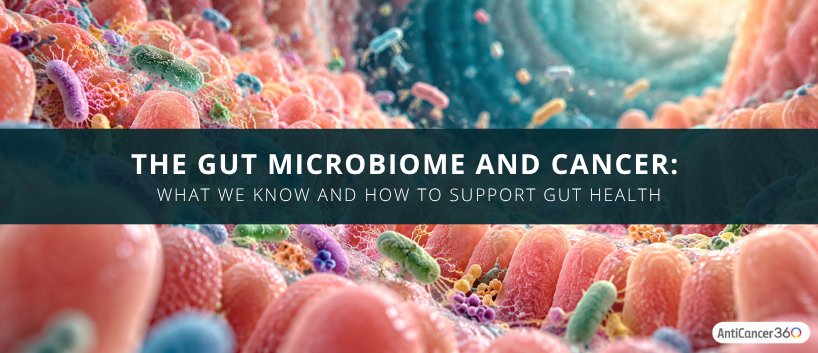
Microscopic illustration of the intestinal lining surrounded by colorful gut bacteria, with the title “The Gut Microbiome and Cancer: What We Know and How to Support Gut Health.

The gut microbiome and cancer have become an important focus of research, as scientists explore how the trillions of microorganisms living in your gut may influence cancer treatment. Together, these bacteria, viruses, fungi, and other microbes form your gut microbiome—a complex ecosystem involved in digestion, metabolism, immune function, and the health of the intestinal lining. … Read more
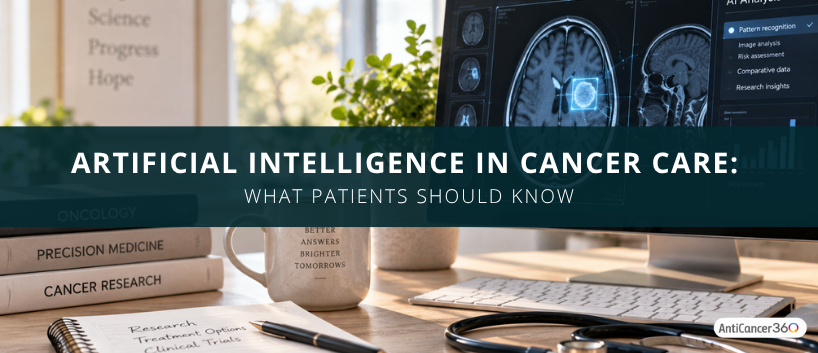

Artificial Intelligence in Cancer Care: What Patients Should Know

AI in cancer care illustrated by medical textbooks and a computer displaying brain scans.

Today, AI can help clinicians detect cancer, analyze medical images and pathology slides, organize complex medical information, and identify potential clinical trials. But AI is not replacing oncologists, radiologists, pathologists, or the human relationships at the center of cancer care. Understanding what AI can do — and what it cannot — can help you separate … Read more

When Food Stops Sounding Good: What to Do About Appetite Loss During Cancer Treatment

Woman looking into an open refrigerator beside the title “When Food Stops Sounding Good: What to Do About Appetite Loss During Cancer Treatment.

Appetite loss during cancer treatment can make food suddenly become complicated. You may know you need to eat, yet nothing sounds good. A few bites may leave you feeling full, familiar foods may taste completely different, or the smell of something cooking may suddenly turn your stomach. Appetite loss is common during cancer care, but … Read more

Cancer-Related Fatigue: Causes, Symptoms, and What Actually Helps

Cancer-related fatigue and the physical and emotional exhaustion that can occur during and after cancer treatment.

Cancer fatigue is different from ordinary tiredness. Cancer-related fatigue can leave you physically exhausted, mentally foggy, or feeling as though even simple activities require enormous effort. Unlike the tiredness that follows a busy day or poor night’s sleep, cancer-related fatigue may persist even after you rest. That is because fatigue during and after cancer treatment … Read more

When Your Body Gets Stuck in Stress: 3 Ways to Help Your Nervous System Reset

Cancer can make it difficult to ever feel fully settled. There are appointments, treatments, scans, symptoms, decisions, and the uncertainty of what comes next. Even when nothing particularly stressful is happening in the moment, you may notice that your body still feels tense, restless, alert, or unable to completely relax. This does not mean stress … Read more