
By Gene Wei, DOM, AP
As an integrative practitioner focused on cancer, a big part of my work is figuring out which anti-cancer substances may work best, despite limited research. And if you’ve spent any time researching soursop and cancer online, you’ve probably seen the claim: soursop fruit, sometimes sold as graviola, is supposedly ‘ten thousand times stronger than chemotherapy.’
So let me tell you up front: that specific number is highly distorted, and I’ll show you exactly why. But if you stop at the debunk and write soursop off as fake news, you’ll miss the more interesting part of the story.
Because underneath the distorted claim, there’s real, published, mechanism-level science worth understanding — especially if you’re dealing with a difficult case of cancer. And later on in the article, I’ll tell you about some of my real-life cases, where I’ve watched soursop appear to move a stuck case as well.
The most useful question was never “is soursop stronger than chemo?” Nobody has tested that in humans, so the comparison doesn’t even make sense.
The better question is: does soursop actually do anything to cancer — and if so, where would it fit? The answer to the first half is yes, in several ways, at least in the lab. The second half — where it fits — is an important part of my theoretical framework which we’ll discuss later in this article.
But first, let’s start with the “10,000x stronger than chemo” number.
Where the “10,000× Stronger Than Chemo” Number Comes From
The honest answer to whether it’s true… we don’t actually know. And I want to be careful, because a flat “no” would overstep the evidence just as badly as the hype does. What I can tell you is that the specific figure — 10,000× — is exaggerated at best, and manufactured at worst.
Researchers once catalogued how strongly many natural compounds kill cancer cells in a petri dish [1]. Soursop’s active compounds — a family called annonaceous acetogenins — are genuinely potent in that setting. Someone dug into that research, found the most flattering comparison available, and produced the “10,000×” claim.

The problem is what’s being compared. A fair comparison puts two things head-to-head in the same test, against the same cells, measured the same way — apples to apples. The viral number is apples to oranges: soursop’s best showing in one kind of assay against a chemo drug’s weak showing in a different assay.
Judge two substances by that kind of mismatch and you can manufacture almost any figure. Cherry-pick these studies differently and you can reach a million times, even a billion times stronger [2,3]. So the size of this number isn’t a direct measure of soursop’s power. It’s more so a measure of how loose the comparison was.
Run the honest, same-assay version and soursop’s compounds land around 250 times as potent as one common chemo drug in that particular test [4]. But even that number doesn’t tell you whether it’s stronger than chemo in a real person — because it’s still potency in a dish.
Nobody has ever tested soursop head-to-head against chemo in humans. So anyone who tells you it’s stronger than chemo is inventing it, and anyone who gives you a confident “no” is overstepping too. So “how much stronger is it” is simply the wrong question for now.
Why I Still Take Soursop Seriously—and Who It’s Actually For
So the honest answer to the soursop question is that there are no human cancer trials of soursop. Not one. Everything we have is cells and animals. And as a rule of thumb, only about one in ten things that work in animal studies end up working in humans — often fewer [5]. And that’s not a problem that’s specific to soursop. That’s true of almost every promising lab finding.
So why take soursop seriously at all? And who would it be for? Those two questions have the same answer. Namely, that when a cancer is early and highly treatable, the smart move is to lean on proven conventional treatment, and not clutter the picture with experimental additions.
But when someone’s conventional options are narrowing — advanced disease, or what the oncologists have called “terminal” — the math changes.
Waiting for the perfect human trial of an exact combination isn’t a luxury that advanced cancer patients have. That’s the setting where a science-guided, still-experimental, natural approach alongside conventional care can make sense. Because in cases like this, doing any less while the clock runs is its own risk.
That’s why I focus on the hardest cases. These cases are where the risk-reward actually favors trying, and it’s the honest place to put experimental tools like soursop. Keep this in mind as you read on below.
The Bigger Frame: It’s Not “How Strong…”—It’s “Which Tool”
The instinct to rank supplements — to find the single “strongest” one — has a mistake baked in. A hammer isn’t better than a saw; you match the tool to the job, and a serious job needs more than one tool. And here’s how I think about the “different tools in the toolbox.”

I think of conventional drugs as being “high pressure aimed at one or a few pathways” — precise and powerful, but prone to resistance when they stand alone, which is why oncology itself increasingly combines them. They just can’t combine too many because the side effects often become unbearable.
Natural compounds on the other hand tend to be “medium pressure across many pathways at once” — gentler, broader, and more combinable, but rarely enough by themselves. So I don’t think about this in terms of “picking a side.” It’s more so about combining them appropriately.
That framework — why single-pathway pressure breeds resistance, and why “many angles” may be the best approach — is the foundation of how I practice. I’ve given this topic its own full breakdown here: → “The Right Tool for the Job: How I Actually Think About Anticancer Substances”.
One More Thing to Keep in Mind: Potency in a Dish
It’s important to remember that anticancer compounds that look powerful “in a dish” were purified, and put directly onto cancer cells in ideal conditions — like a disinfectant wiping a counter. That says almost nothing about what happens when you swallow a substance, and hope it reaches a tumor deep in the body at the same concentration. For soursop specifically, how well acetogenins are absorbed and what actually reaches a tumor in a person is poorly characterized. Potency in a dish is the start of a question, not an answer.
I’ve unpacked why lab-potency numbers are misleading — and what actually has to be true for a compound to matter in a person — in its own piece: → “Why ‘Powerful Against Cancer in a Dish’ Tells You Almost Nothing” (full article).
What the Research on Soursop and Cancer Actually Shows
Now, that being said, soursop’s real value isn’t a single knockout punch — it’s a spread of potential anticancer mechanisms. And every effect that I’m going to explain below comes from cell or animal work. So read it as “this is what the biology suggests,” not “this is proven in people.”
Soursop’s most-studied angle is energy and metabolism. Acetogenins from soursop inhibit Complex I, a key step cells use to make energy — picture jamming the cells’ batteries. Cancer cells, often metabolically greedy, are thought to be especially vulnerable to having their power cut. And in pancreatic cancer models, soursop also turned down the machinery tumors use to run on sugar [6,7]. Starving the cancer’s energy supply is a genuinely promising metabolic angle.
It also switches on apoptosis — the cellular self-destruct programing that cancer learns to disable. Soursop compounds do this by lowering the proteins that keep cancer cells alive, and raising the ones that trigger death. It causes cell-cycle arrest, freezing cancer cells at a checkpoint so they can’t divide. These compounds also show an anti-metastasis signal, reducing cells’ ability to move and invade in pancreatic models.

Then there’s the potential effect that’s most relevant to difficult cases — multidrug-resistance reversal. Some cancer cells survive chemo by pumping the drug back out, in order to defend themselves. Soursop’s acetogenins can kill multidrug-resistant cells and appear to slip past these pumps [Cancers 2022 review]. That doesn’t mean that it’s “stronger than chemo.” But it does mean that it’s potentially complementary, hitting the exact cells that defeat chemo.
And the one anticancer effect that matters most to me clinically is selectivity. One soursop compound was roughly twenty times more toxic to cancer cells than to normal ones [8]. Selectivity — sparing the patient while hitting the disease — is exactly what cytotoxic chemo struggles with.
So we can’t say “soursop works against cancer in people.” But the multi-angle profile is genuinely there, which is why it’s worth taking seriously in difficult cases. Now look at that list again, and notice what anticancer mechanisms are missing. Finding those gaps is central to how I practice.
What Soursop Doesn’t Touch—and Why That’s the Point
In cancer, hitting one pathway often helps somewhat. And hitting a second, complementary pathway often helps more. To illustrate this principle, let’s look outside the soursop effects first, to get an idea of how anticancer synergy works between various substances.
For example, curcumin (from turmeric) and EGCG (from green tea), were tested against tumor blood-vessel growth in a colorectal model. When tested alone, each one of these substances helped. But combined, they suppressed the blood supply more than either did on its own, by closing a pathway neither could fully shut down by itself [9].
The literature is full of these examples — different compounds hitting different nodes, adding up to an anticancer effect that was more than the sum of their parts [10]. All this is preclinical research, so it’s far from conclusive. But these possibilities are real and consistent.
Now back to soursop’s coverage map. It hits metabolism, apoptosis, cell-cycle arrest, anti-metastasis, and drug-resistance reversal — a real spread of anticancer mechanisms. But there are major mechanisms that soursop does not appear to touch, at least in the published record.
This includes targeting tumor blood-vessel growth, targeting cancer stem cells (the small, treatment-resistant population many believe drives relapse) and targeting the pathways they run on — including Wnt, Notch, and Hedgehog. Soursop also doesn’t seem to meaningfully engage the immune system the way immune-stimulating supplements, or immunotherapy would engage it [Cancers 2022 review].
Now, “doesn’t touch” means not established. But it hasn’t been proven that it can’t. And when you’re building a plan, you work with what’s documented.
And here’s the most interesting part: other natural compounds appear to cover those exact gaps. The blood-vessel angle soursop misses is covered by curcumin, EGCG, and resveratrol. The cancer-stem-cell and Wnt-Notch-Hedgehog angle is covered by another well-studied group — curcumin, EGCG, sulforaphane, resveratrol, and genistein — with sulforaphane notable for the stem-cell pathways [11].
So while soursop brings the metabolism, apoptosis, and anti-resistance angles… things like sulforaphane or the green-tea family may bring what soursop can’t reach.
Now the part you have to understand, because running with this info too fast is where this can get dangerous. Everything I’ve presented here is extrapolation. Nobody has tested “soursop plus sulforaphane” against a human tumor.
What I’ve walked you through is mechanistic reasoning — the general principle that multi-angle combinations tend to outperform single agents. And remember, only about one in ten animal findings hold up in people. Take it as how I think about all this, not a protocol that I’m promising works, and not recommendations for your particular case.
And a second warning that matters just as much: these compounds are not interchangeable items on a list. A compound that helps in one cancer can be possibly harmful in another. Resveratrol is the clearest example — it looks great on paper, but it also behaves like a weak estrogen and can act as an estrogen-receptor agonist [12,13].
In a hormone-receptor-positive breast cancer, one that feeds on estrogen signaling, there’s genuine concern resveratrol could stimulate the disease rather than slow it. This possible effect is still debatable, but this also is not a place to guess. So the right tool in one context may be the wrong tool in another, which is precisely why these protocols should be individualized.
A Little Direct Evidence for “Alongside, Not Instead”
Most soursop research studies it on its own, but a few have paired it with conventional drugs, which is closer to how I’d ever actually use it. Soursop’s acetogenins, for example, were reported to work synergistically with sorafenib, a targeted liver-cancer drug, doing more against liver cancer than either alone [14].
It’s still a preclinical study, so still a 1 in 10 possibility. But it points the same direction as the mechanism: soursop as something that might support conventional treatment, not replace it. I’ll give you a concrete example of what that looks like — with the caveat up front that it’s an anecdote… not proof.
I’ve had a couple of stubborn cases over the years that stand out in my mind in regard to soursop compounds — in particular, one pancreatic and one prostate case, both very clean examples. Both were very advanced cases, both were on conventional treatment plus our foundational supplement protocol, and both had stalled — the scans were stable, but we weren’t getting the continued improvement that we wanted.
And because things were stable, we had a rare chance to test one variable cleanly. We kept every drug and every supplement exactly the same, the oncologist signed off, and the only thing we added was soursop, as standardized pawpaw (a cousin to soursop, which we’ll talk more about in a minute).
But after we added the pawpaw supplement to these cases, both showed improvement on the very next scan. Now, I can’t definitively prove that the pawpaw is what made the difference. That being said, it was the only thing we changed — about as clean as real-world observation gets. But a clean anecdote is still an anecdote.
And for every case like that, there are others where we added the same thing and nothing moved. So I share it not as proof, but as a signal that makes me keep soursop in the toolbox for the hardest cases — alongside conventional care, not instead of it.
Most importantly, with natural approaches, it’s rare that one or two things alone are enough to move the needle. So combining many anticancer substances together, especially with conventional drugs, is where one would find the greatest probability of benefit.
The Problem Nobody Mentions: What’s Actually in the Bottle
Another important fact that most people miss… One bottle of soursop can be loaded with the active cancer compound, and the next bottle could contain basically none — even if they’re from the same brand.
Genetic variety, where it was grown, ripeness, which part of the plant is used, harvest timing, and how it’s extracted… All of these factors were found to influence the amount of the soursop acetogenins contained within a supplement.
One analysis found a sixteen-fold range in a single compound across fruit samples [15,16]. So a soursop supplement with an unknown amount of the active ingredient is literally a mystery box. This is also why supplement “standardization” is important.
If You’d Actually Use It: Where It Fits, and How
So, in most cases, soursop is not a first move when it comes to fighting cancer — and definitely not something I’d reach for in an early, highly treatable cancer. It makes the most sense at the advanced end, alongside conventional care, under proper guidance.
When it does come up in my practice, I don’t use random fruit or generic capsules, precisely because of the mystery-box problem. I use a standardized pawpaw product — pawpaw is a close botanical cousin with the same family of compounds, standardized to a consistent active content, which turns it from a mystery box back into a measurable tool.
The one I’ve used is Nature’s Sunshine Paw Paw Cell-Reg. I have no affiliation and no financial relationship; I name it only because the standardization is what matters, and as of writing this article, it’s the only one I’m aware of.
A common starting point is two capsules, three times a day, with meals. Nausea is the usual early sign the dose is too high. And if this happens, one would lower the dose, not push through. And because these compounds can interact with medications, this genuinely needs a qualified practitioner who knows your case. Even here, soursop is one tool in the toolbox, not the plan by itself.
The One Real Safety Issue: Soursop and Parkinson’s
There’s also a genuine safety concern the online hype never mentions, so I have to emphasize it. On the Caribbean island of Guadeloupe, researchers found an unusual cluster of an atypical, Parkinson’s-like movement disorder. And the common thread was heavy, lifelong consumption of soursop — fruit, seeds, and leaf teas, over decades [17]. The same acetogenins that jam the batteries of cancer cells can, in large and prolonged exposure, be toxic to certain brain cells.
But I think the panic is overblown as well. Here’s why: The best analysis suggests soursop didn’t raise the overall rate of Parkinson’s on the island — the total burden was about what you’d expect [18].
What it seems to do is shift the type toward that atypical form. Among the atypical cases, roughly three in four were heavy consumers [19] — so the relative risk was real and elevated, but the absolute odds stayed in the low single digits, and about one in four patients weren’t heavy consumers at all.
Two more things point away from alarm: this was decades of heavy dietary intake, a very different exposure than a measured, standardized supplement course. And in younger patients, symptoms sometimes improved after they stopped consuming soursop [20].
The honest takeaway: it doesn’t look like soursop raises your overall risk of Parkinson’s — it appears to shift the type of Parkinson’s that expresses. But the neurotoxic risk is real, which is exactly why dose, duration, and supervision matter, and why this isn’t something to take casually or forever. Not necessarily a reason to avoid it if it’s appropriate for a certain case… but definitely a reason to be careful with it.
The Bottom Line
Soursop isn’t the miracle the hype promises, but it isn’t a scam either. It’s one high potential tool, with a real multi-angle profile in the lab, with real gaps, a real safety caveat, and zero human cancer trials behind it. Whether soursop is “stronger” than chemo in a real person is simply untested. But the anticancer benefits are definitely possible.
And most importantly, conventional medicine brings high pressure against cancer from a few angles. While natural approaches bring medium pressure from many. The best chances for benefit comes from combining them thoughtfully — individualized to the specific person and their case, alongside conventional care, not instead of it. Maybe that’s not the answer you came for if you wanted a miracle claim. But for the people I work with, that’s the honest answer I give them when they ask me about soursop.
Frequently Asked Questions
Is soursop really 10,000× stronger than chemo? We don’t actually know whether soursop is stronger than chemo in a person — it’s never been tested head-to-head in humans. The specific “10,000×” figure is manufactured, from an unfair comparison of soursop’s best lab result against a chemo drug’s weak result in a different test. The honest same-test comparison is far smaller — around 250× in one assay [21] — and even that is a potency-in-a-dish number that doesn’t predict what happens in a body.
Does soursop cure cancer? There’s no evidence it does, and no human cancer trials of soursop at all. What exists is lab and animal research showing several anticancer mechanisms — interesting, but not proof of benefit in people.
What does soursop actually do to cancer cells? In cell and animal studies, soursop compounds interfere with cancer-cell energy production, switch on programmed cell death, halt cell division, reduce spread in some models, and can kill some drug-resistant cells. These are laboratory findings, so it should be considered inconclusive emerging research.
Can you take soursop with chemotherapy? Only with your oncologist’s knowledge. A few studies suggest soursop compounds may work alongside certain drugs, but supplements can interact with cancer treatments in harmful ways, and some compounds are wrong for specific tumor types. This requires a practitioner who knows your full case.
Does soursop cause Parkinson’s? Heavy, decades-long consumption has been linked to an atypical, Parkinson’s-like disorder in one well-studied population. The evidence suggests it shifts the type of Parkinson’s rather than raising the overall rate, but the neurotoxicity risk is real — which is why dose, duration, and supervision matter.
Soursop vs. pawpaw — what’s the difference? They’re close botanical relatives sharing the same family of active compounds (acetogenins). Standardized pawpaw supplements are often preferred over generic soursop because their active content is measured and consistent, rather than varying wildly bottle to bottle.
What’s the “best” anticancer supplement? That’s the wrong question. There’s no single best one, any more than there’s a single best tool in a toolbox. What matters is which compound fits the specific job and case — and in serious cancer, the combination usually matters more than any one item.
Disclaimer
⚖️ This content is for educational purposes only and reflects clinical observations and emerging research. It is not medical advice and is not intended to diagnose, treat, cure, or prevent any disease. The methods discussed are experimental and are generally most appropriate for advanced cases where conventional treatments have limited proven benefit. They should be considered alongside, not instead of, conventional medical care, and only under the supervision of qualified medical professionals familiar with your specific case. Individual results vary. Anticancer360 does not replace your oncologist or primary care team. Always consult your treating physicians before making changes to your treatment plan, diet, or supplement regimen.
Which describes you best?
Please select one of the options below, and you'll be guided to the online training that best fits your situation.

I'm fighting an advanced (or late stage) cancer and I'm determined to "beat the odds."

I'm fighting an earlier staged cancer, and want to maximize the outcome & minimize the side effects.
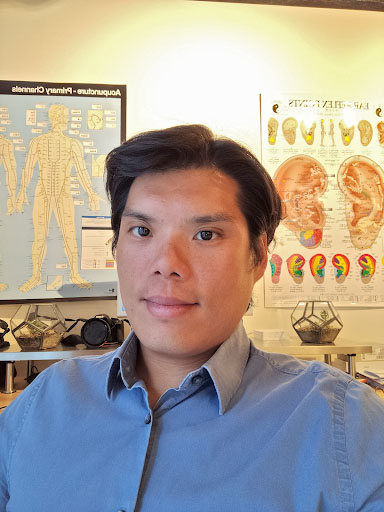
Gene Wei is a Board Certified Doctor of Oriental Medicine in the state of Florida, and the founder of AntiCancer360. He’s also a graduate of the University of California Los Angeles, and East West College of Natural Medicine.
His practice focuses on aggressive integrative strategies used alongside conventional oncology care, particularly for advanced and difficult cancers.