If you’re fighting cancer, most people think the same thing: hit it as hard as you possibly can. Kill as much cancer as possible, and as fast as possible. It seems obvious, and I understand the instinct completely.
But after many years of doing this work alongside conventional oncology, I’ve come to believe something that sounds backwards at first. How you kill cancer matters just as much as whether you kill it. Kill too hard, too fast, and the die-off itself can work against you. It can feed the very cancer you’re trying to shrink, and it can make the next round of treatment harder. An important part of cancer treatment recovery is understanding what happens after cancer cells die and how the body manages the resulting debris and inflammation.
So in this article I want to walk you through why that happens — the real biology of what aggressively killing cancer leaves behind. And then I’ll tell you what I actually do about it, because there’s a practical answer, and it’s probably not the one you’d expect.
Killing Cancer Creates a Mess
Start with something simple. When you kill cells — any cells — you make a mess. Dead cells, cellular debris, and inflammation as the body moves in to clean up. In healthy tissue, that cleanup is routine and you never notice it.
But in cancer, that mess isn’t neutral. It can actively work against you, in four different ways.
First, dying cells send signals. This is one of the strangest findings in cancer biology. When cancer cells die, they can release signals that tell the surviving cells to grow and multiply faster — a kind of “repopulation” response. It was first described in radiation therapy, through a pathway researchers nicknamed “Phoenix Rising,” where an enzyme in the dying cells (caspase-3) drives the regrowth of the ones left behind [1]. The die-off is real. But the cancer cells dying can spur the survivors.
Second, the debris can stimulate growth. When the immune system moves in to clear away large amounts of tumor debris, those cleanup cells can release a wave of inflammatory, pro-growth signals — researchers call it “debris-stimulated tumor growth” [2]. And once you know how this works, it’s hard to unsee. In one experiment, researchers took cancer cells, killed them with chemotherapy in a dish, and injected just the dead debris into mice. These mice were previously injected with live cancer also, but so little that they didn’t form a tumor on their own. But once they injected the debris, it kicked the cancer into growth [3]. A big pile of dead cancer can, paradoxically, hand the surviving cancer cells a boost.
Third, inflammation itself feeds cancer. There’s an old and well-supported idea in oncology that “tumors are wounds that do not heal” [4]. Cancer hijacks the body’s repair machinery, and chronic, unresolved inflammation is one of its favorite fuels. So the inflammatory aftermath of a massive kill isn’t a harmless side effect. It’s the exact environment cancer thrives in.
Fourth — and this is the one that gets overlooked — too much die-off too fast lays down scar tissue. When you injure a lot of tissue quickly, the body’s repair response can overshoot into fibrosis, a fancy word for scarring. And here’s why that matters for cancer specifically. Scar tissue is hard to get into. It’s dense and poorly supplied with blood. Drugs struggle to penetrate it, the immune system struggles to patrol it, and any natural compound you take struggles to reach whatever cancer is hiding inside it.
This isn’t just my theory. Radiation and some chemotherapy are known to drive fibrosis in the tissues they hit [5]. An oncologist even once told me, half-frustrated, that this is one of her quiet headaches with radiation — it can scar an area so thoroughly, that when the cancer is later handed to her to treat with chemo, the drugs can barely get into the hardened tissue.
If that sounds familiar, it should: it’s the same “can the drug even reach the tumor?” problem I wrote about in the potency article — and heavy scarring makes it worse [6]. A fast, brute-force kill can wall the cancer off behind scar, and leave the survivors with a fortress.
Even Conventional Medicine Kills Carefully
Here’s another concept that should reframe how you think about all this. Mainstream oncology already knows a fast kill is dangerous — and it plans around it as well.
The clearest example is tumor lysis syndrome. When you kill a large amount of cancer very quickly, the flood of contents released from all those dying cells can overwhelm the body — spiking potassium, phosphate, and uric acid to levels that can damage the kidneys and even become life-threatening [7].
Oncologists take this seriously. They pace the treatment, hydrate the patient heavily, and sometimes give drugs specifically to handle the metabolic load. In other words: even when the goal is maximum kill, doctors deliberately slow it down so the body can keep up with the metabolic waste.
That’s the whole idea of killing gently — and conventional medicine already practices it, at least for the acute, life-threatening side of it. What it pays far less attention to is the slower damage: the tissue inflammation, the scarring, the debris that lingers. And that’s the part I focus on.
How the Cell Dies Matters, Too
Not all cell death is equally messy. When a cell dies in the clean, programmed way — apoptosis — it essentially packages itself up neatly for disposal, quietly. When a cell dies by bursting open — necrosis — it spills its contents everywhere and causes massive inflammation in the surrounding tissue. Same dead cell, very different mess left behind.
Here’s the way I picture it. Killing a tumor is a bit like gutting a kitchen for a remodel. You can take it apart neatly — unscrew the cabinets, carry the pieces out one at a time — or you can go at it with a sledgehammer. Apoptosis is the neat teardown. Necrosis is the sledgehammer. And it barely matters how fast you can demolish if your cleanup crew can’t keep up. Sledgehammer faster than the debris gets hauled away, and the whole workspace clogs with rubble, and the rebuild slows to a crawl. Your tissue works the same way.
Now, I want to be careful here, because this is where it gets nuanced. Some inflammation is actually good — a certain kind of cell death even helps the immune system recognize and attack cancer. So the goal is not zero inflammation, and it’s not about “never provoking the immune system.” That would be its own mistake.
The real goal is subtler: don’t create more mess than the body can clean up and calm down. A little die-off that gets cleared and resolved quickly is exactly what you want. A massive die-off that overwhelms the cleanup crew, smolders into chronic inflammation, and scars — that’s the problem. “Kill gently” doesn’t mean kill weakly. It means kill at a pace the body can actually keep up with.
So the Goal Isn’t Just to Kill — It’s to Kill and Clear
The researchers behind that debris experiment put the lesson better than I can. As one of them, Sui Huang, summed it up: “Thou shall not kill — or kill gently and remove the dead bodies immediately” [8]. That one line is basically this whole article. If you’re going to kill cancer, kill it gently — and clear the debris fast.
Once you see it this way, the strategy changes. Killing is only half the job. Clearing the mess is the other half, and it’s just as important… and almost nobody talks about it. So the levers I care most about are the ones that help the body clean up and calm down after the kill.
Lever 1 — Clearance: Get the Mess Out (This Is the Big One)
Debris and inflammatory signals get carried away by your blood. So the better your circulation, the faster the mess clears — before it can pile up into chronic inflammation and scar. The worse your circulation, the longer that mess sits and smolders.
This lines up with something I’ve watched clinically for years. Here’s the pattern as I understand it: when circulation is poor, a given amount of tissue injury smolders — the debris and the inflammatory signals aren’t carried off, so the same insult produces more inflammation, and more of it hardens into lasting scar.
When circulation is strong, the threshold rises and the clock speeds up — it takes more injury to produce the same inflammation, and what does happen resolves faster, before it can scar. Same injury, two completely different outcomes, depending on flow.
This isn’t settled science — it’s my working model from clinical observation, and I hold it as a theory. But it’s the reason my main answer to the “kill gently” problem isn’t a supplement at all. It’s increasing circulation, which is what increases clearance.
Lever 2 — Resolution: Help the Inflammation Switch Off (Smaller, but Real)
Inflammation is supposed to actively turn itself off. Your body makes specialized molecules from omega-3 fats, called resolvins. The job of resolvins is to clear debris and shut inflammation down. In the same study where debris caused tumor growth, giving mice small amounts of resolvins stopped the debris-driven tumor growth and made the anti-cancer treatment work better [9].
But I want to be honest about the magnitude of this lever, because it’s easy to oversell. In that study, the resolvins were given in pure, concentrated, injected form — doses far beyond anything your body can make on its own. The amount of resolvins you can actually generate from fish-oil supplements, or from low-dose aspirin (which nudges the body to make a related pro-resolving molecule), is much smaller than that.
We also can’t get injectable resolvins. So this is a real mechanism and a reasonable thing to support — but it’s a modest lever in practice, and that’s precisely why I lean far more heavily on Lever 1, the circulation side, where we can actually move the needle.
Lever 3 — The Popular Die-Off Remedies (Each Touches a Piece, None Is the Main Lever)
If you spend time in cancer forums, you’ll see the same names come up for “die-off.” I want to give you my honest read on each based on mechanism — because in this area almost nothing has solid human evidence either way. So the useful question isn’t “what’s proven,” it’s “does the mechanism even point at the right target, and what does it miss?”
Binders — activated charcoal, clays, zeolite, chlorella. The mechanism is real but narrow: they bind toxins and waste in the gut and carry them out in the stool, which supports the body’s elimination route. What they miss is almost everything that matters here.
The die-off debris driving the problem sits in your tissues and bloodstream, and it’s cleared by immune cells and circulation — not dumped into your gut for a binder to catch. So a binder is acting in the gut, far from the tissues where the mess actually is. They can be good as general support, but not so much a lever for tumor die-off.
Serrapeptase (and similar proteolytic enzymes) at least points at the right kind of target. It’s a fibrin-digesting enzyme. And fibrin is a protein that is part of the scaffolding of blood clots and scar tissue. So in principle it can break down some of the extracellular protein and fibrin in the “mess,” and it has a mild anti-inflammatory, anti-swelling reputation [10].
So mechanistically, serrapeptase is a partial yes — it could chip away at the fibrin-and-debris layer and maybe calm a little inflammation. But it misses the main event two ways.
First, the debris that actually matters is dying cells, and clearing those is an immune-cell job — macrophages engulfing and hauling them off — which an enzyme doesn’t do.
Second, it’s an oral enzyme, and whether it survives digestion and reaches a tumor intact and active is a real question — the same “can it even get there?” problem I covered in the potency article. And there’s little reason to think it meaningfully reverses established scar. So: a plausible addition, but not the main lever.
Liver-detox antioxidants — NAC, glutathione, milk thistle. The mechanism here is genuinely useful, just at the wrong level. They support the liver’s own detox and glutathione pathways — the downstream step of getting waste out of the blood once it’s already been carried away from the tissue.
And their antioxidant action could, in theory, calm some inflammation and fibrosis. But they work mostly at the liver and systemic level, not at the tumor tissue where the clearance and scarring actually happen.
And the antioxidant angle is a double-edged sword. In animal studies, antioxidants have actually accelerated cancer rather than slowing it [11].
And there’s a related, well-recognized concern. Because some treatments — like chemo and radiation — work partly by creating oxidative stress, high-dose antioxidants during these treatments could, in theory, blunt them [12]. So this one doesn’t just “miss the target” — in the wrong scenario, it could work against the very treatments you’re trying to support.
So, each of these methods touches a piece — the gut, the fibrin, the liver — but none touches the tissue-level clearance that actually moves the mess. That still depends on circulation.
And Pace the Kill Itself
There’s also the obvious lever: don’t be too aggressive. This is where “kill gently” connects to how I think about these tools in general — a thoughtful combination of gentler agents, applied as steady pressure, is inherently more clearable than one overwhelming assault (the right tool for the job).
This is also why I’ve grown cautious about certain aggressive interventions in certain cases. IV oxidative therapies are an example — treatments that work by generating a big burst of oxidative stress to damage cancer.
In some cases, I think that burst can be too much, too fast. I’ve seen this most clearly with EBOO, a blood-ozonation therapy. It’s not that it isn’t working — it may well be killing cancer. It’s that it’s killing hard and fast, rather than gently, and the debris-and-inflammation wave that follows can be counterproductive, for all the reasons above. It’s not a blanket rule against these therapies. It’s a reminder that even a good tool, delivered too aggressively, can violate the gentle-kill principle.
A Quick Word on Pseudoprogression — So You Don’t Panic
One practical example explains this. If a tumor swells after treatment, that is not automatically the cancer growing. Conventional oncology has a name for exactly this: pseudoprogression — where a tumor looks bigger on a scan because the immune system and inflammation have flooded in, before it then settles or shrinks.
It’s well documented after immunotherapy [13], and it’s a recognized, named phenomenon after chemoradiation in brain tumors as well — common enough that doctors had to rewrite their response criteria so they’d stop mistaking it for failure [14]. A related transient “flare” shows up with some targeted and hormonal therapies too. So swelling after a kill is often from the mess and the cleanup process — not the disease winning.
I’ll give you one case that has stuck with me, because it shows how much this can matter. A client of mine with glioblastoma — a serious brain cancer — came to me with two tumors, and we worked alongside his radiation and chemotherapy. At his first reassessment, a couple of months in, one tumor had disappeared. But the other looked bigger.
His oncologists raised the possibility that it was swelling — pseudoprogression — but they were leaning toward real progression, and they were ready to change the treatment.
Here’s how I reasoned it through with him, and I told him plainly that we couldn’t know for sure at the time. One tumor had disappeared, which was a good sign the treatment was working. And the tumor that looked bigger was the larger of the two — which, by everything I’ve laid out in this article, is exactly the one you’d expect to swell.
A bigger mass has more tissue to clear and more disorganized blood vessels doing the clearing, so the die-off can back up and inflame even more, before it resolves. So I leaned toward pseudoprogression. The oncologists agreed it was reasonable to hold the course rather than abandon a treatment that was clearly working on the other tumor.
So they kept the treatment the same, we kept our protocol essentially the same, and I had him lean harder into the circulation work — the Reflow protocol — to support clearance while we waited to see. Then on the next scan, that second tumor had shrunk too. It was confirmed pseudoprogression.
Now, I want to be careful about what that case does and doesn’t prove. It does not prove our protocol shrank the tumor — the radiation and chemo were running the whole time, and that’s the most likely reason it responded.
What it shows is the judgment call: reading swelling correctly, and not throwing out a working treatment out of panic. And it doesn’t always work out that way. Sometimes swelling really is progression, and you have to change course. But that’s exactly why understanding the difference matters so much.
Holding This to an Honest Standard
Let me be clear about how solid each piece of this is, because it varies. Some of it is settled: that tumor lysis syndrome is dangerous, that inflammation feeds cancer, that radiation causes fibrosis, that pseudoprogression is real.
That dying cells signal survivors, that debris stimulates growth, that resolvins counter it — those are real findings, but mostly from cell and animal studies. And only about one in ten animal findings ends up holding true in people [15].
And my circulation-and-clearance model — the idea that better flow raises the threshold for inflammation and scarring — is my working theory from case observations, not proven fact. I try never to let theory borrow the confidence of settled science. So I’ll also hold my protocols to this same standard.
But everything I’ve explained up until now is exactly why I don’t chase the most aggressive kill I can find.
Cancer Treatment Recovery: Finding the Right Balance
There’s an age old concept from my Eastern medicine training that fits here almost perfectly. We think of everything in yin vs. yang (i.e. cold vs hot, wet vs dry, female energy vs male energy.) And everything in life tends to require a balance of these opposites.
Killing is the aggressive, outward force — the yang. Clearing and resolving and healing is the receptive, restorative force — the yin. Health lives in the balance between them. Pour all your energy into the killing and none into the clearing, and you’ve tipped out of balance — even if the killing “works.”
Now, cancer is an extreme situation, and sometimes it calls for aggressive, deliberately extreme measures — for a season. I’m not arguing for going soft. I’m arguing that when you do go hard, you have to put just as much intention into helping the body clear and recover as you put into the attack.
The Bottom Line
Killing cancer is not free. Every kill leaves a mess — debris, inflammation, and sometimes scar — and with cancer, that mess can feed the survivors and wall off the disease from the next treatment. So the goal was never just to kill as hard as possible. It’s to kill the cancer at a pace the body can clear, resolve, and heal.
You have a few levers for that, and they’re not equal. Supporting your body’s own resolution helps a little. Most of the popular “die-off” remedies are aimed at the wrong target. But the big one, the one I build around, is clearance — and clearance runs on circulation. That’s why, for all the talk of what kills cancer, the thing I keep coming back to is how well your body can clean up afterward. Kill it, yes — but kill it gently, and clear the field.
Frequently Asked Questions
Isn’t it always better to hit cancer as hard as possible? Not necessarily. Killing cancer creates debris, inflammation, and sometimes scar tissue, and in cancer that mess isn’t harmless — it can signal surviving cells to grow, feed inflammation that cancer thrives on, and wall the disease off behind scar so the next treatment can’t reach it. The goal is to kill at a pace the body can actually clean up, not to swing the biggest hammer regardless of the aftermath.
Can killing cancer cells actually make cancer grow? In lab and animal research, yes — this is real. Dying cells can release signals (“Phoenix Rising”) that spur surviving cells to repopulate, and the debris from a large kill can trigger pro-growth inflammation (“debris-stimulated tumor growth”) — in one experiment, injecting just the dead debris was enough to kick cancer into growth in mice. These are mostly preclinical findings, but they’re part of why how you kill matters, not just how much.
Does “kill gently” mean I should avoid chemo, radiation, or surgery? No. This is about how to support conventional treatment, not replace it. Chemo, radiation, and surgery all create die-off and inflammation — so helping your body clear that mess and calm the inflammation is meant to work alongside your treatment and, potentially, help it work better. Always work with your medical team.
Why does a tumor sometimes swell after treatment? Swelling right after a kill is often inflammation and immune cleanup, not the cancer growing — real tumor growth doesn’t happen overnight. Conventional oncology calls this pseudoprogression and it’s well documented after immunotherapy and after chemoradiation in brain tumors. It’s a signal to check with your medical team, not to panic.
What about binders, enzymes like serrapeptase, or detox supplements for die-off? These come up constantly in forums, and my honest, mechanism-first read is that each touches one piece but misses the main one. Binders act in the gut, not where tumor die-off is cleared. Serrapeptase can break down some fibrin and extracellular debris, but the debris that matters is cleared by immune cells, and it’s an oral enzyme that may not reach the tumor intact. Liver-detox antioxidants like NAC or glutathione support the liver’s elimination step, but they work systemically rather than at the tumor — and their antioxidant activity can even blunt treatments that rely on oxidative stress. None of them replaces what good circulation does at the tissue level.
What’s the single most important thing for killing cancer gently? In my clinical view, circulation. Debris and inflammatory signals are carried off by blood flow, so good circulation clears the mess before it can smolder into chronic inflammation and scar. That’s why improving circulation — what the Reflow protocol is built around — is the lever I lean on most. It seems to be able to increase circulation in a way that drugs and supplements often can’t. But it’s experimental and best done alongside conventional care.
Disclaimer
⚖️ This content is for educational purposes only and reflects clinical observations and emerging research. It is not medical advice and is not intended to diagnose, treat, cure, or prevent any disease. The methods discussed are experimental and are generally most appropriate for advanced cases where conventional treatments have limited proven benefit. They should be considered alongside, not instead of, conventional medical care, and only under the supervision of qualified medical professionals familiar with your specific case. Individual results vary. Anticancer360 does not replace your oncologist or primary care team. Always consult your treating physicians before making changes to your treatment plan, diet, or supplement regimen.
Which describes you best?
Please select one of the options below, and you'll be guided to the online training that best fits your situation.

I'm fighting an advanced (or late stage) cancer and I'm determined to "beat the odds."

I'm fighting an earlier staged cancer, and want to maximize the outcome & minimize the side effects.
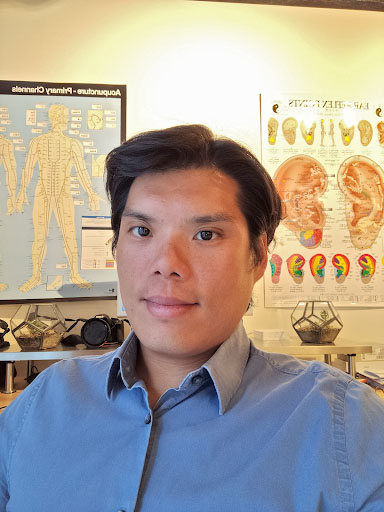
Gene Wei is a Board Certified Doctor of Oriental Medicine in the state of Florida, and the founder of AntiCancer360. He’s also a graduate of the University of California Los Angeles, and East West College of Natural Medicine.
His practice focuses on aggressive integrative strategies used alongside conventional oncology care, particularly for advanced and difficult cancers.