
By Gene Wei, DOM, AP
As an integrative practitioner who focuses on cancer… people naturally come to me seeking advice about supplements during cancer treatment. And people are often split between their oncologist telling them not to take any supplements, and being inundated with information online about a variety of supplements that could help.
But, my first question is never “which supplement should this person be taking?” But rather… “should this person even be taking supplements at all?” In this article, I’m going to be giving you the exact framework that I use to decide this very question, and how one should be thinking in this kind of scenario. And as you’ll see, in some cases, I may even be in agreement with the oncologist’s “no supplements” recommendation, even from the perspective of an integrative practitioner.
The short answer, before we go deeper. Whether supplements make sense comes down to two numbers for the specific case: the chance of complete remission with conventional treatment, and the 5-year survival rate with conventional treatment alone. When both are high, conventional care is already doing the job — and I’ll often tell people to mostly skip the supplements. When both are low, that’s where adding science-guided supplements — alongside conventional treatment, not instead of it — makes the most sense. Everything below is how to find those two numbers, and how to read them.
Supplements During Cancer Treatment: Not a Black-and-White Situation
Whether or not one should take supplements when they’re fighting cancer often gets framed as a black-or-white situation. Most oncologists will often say not to take any supplements because they could interfere with treatment. Then you go online, and you’re inundated with articles and videos about this supplement that could fight cancer, that supplement that could fight cancer. And oftentimes, this information comes with scientific citations as well, which makes it even more confusing.

But before we dive deeper into this topic, the first thing that I want you to understand is that this topic is not a black-and-white situation. Far from it. Because fighting cancer comes with such a huge range of scenarios. And what may be appropriate for one scenario may not be appropriate for another.
Whether Supplements Are Appropriate or Not Depends on the Severity of the Case
How do I go about determining whether supplements might be appropriate for a person’s particular case? Well, this generally comes down to one variable, and two statistics… namely, how difficult their case may be when using conventional oncology alone… as well as the % chance of complete remission with standard of care approaches, and the 5 year survival rate.
Regardless of what one thinks about conventional approaches to cancer, there’s one thing that is undeniable: conventional oncology has very good statistics regarding the outcomes of their treatments. In some cases, the outcomes might be very good. In some scenarios, not so much.
(One note before the numbers: these are population averages, not predictions for any one person. An individual’s odds depend on subtype, biology, and treatment — but the averages are enough to show where a case tends to sit.)
In general, conventional oncology does very well with earlier-stage cancers. Here are some examples:
| Cancer type (stage) | 5-year relative survival | Complete remission with standard care |
|---|---|---|
| Early-stage (localized) breast cancer | ~99% | Expected outcome |
| Early-stage (localized) prostate cancer | ~100% | Expected outcome |
| Localized differentiated (papillary) thyroid cancer | ~99–100% | Expected outcome |
Sources: breast, prostate, and thyroid survival rates — American Cancer Society / SEER.
In contrast to scenarios like this, there are cases where conventional oncology is not very successful. Here are some examples.
| Cancer type (stage) | 5-year relative survival | Complete remission with standard care |
|---|---|---|
| Metastatic (distant) pancreatic cancer | ~3% | Rare |
| Glioblastoma (brain) | ~6% | Rare |
Sources: pancreatic distant-stage 3% — American Cancer Society / PanCAN; glioblastoma ~6% — AACR Cancer Progress Report 2025, citing NCI SEER.
These are the two extremes where conventional oncology does the best and the worst. But, like anything else in life, there’s everything in between.
Here are some examples of cases where oncology does pretty well.
| Cancer type (stage) | 5-year relative survival | Complete remission with standard care |
|---|---|---|
| Regional breast cancer (spread to nearby nodes) | ~86% | Common |
| Localized colorectal cancer | ~90% | Common |
Sources: breast (regional 86%) and colorectal — American Cancer Society / SEER.
And then, of course, there are scenarios where oncology doesn’t do so well, but the statistics aren’t the worst.
| Cancer type (stage) | 5-year relative survival | Complete remission with standard care |
|---|---|---|
| Regional pancreatic cancer (nearby nodes) | ~15% | Uncommon |
| Distant (metastatic) breast cancer | ~30% | Uncommon |
Sources: pancreatic (regional ~15%); breast (distant ~30%) — American Cancer Society / SEER.
(A note on regional pancreatic: this figure moves a lot depending on how “regional” is defined. The ~15% is the ACS summary-stage estimate; other SEER analyses report notably higher — into the 20–40% range. Treat it as one estimate, not a settled number.)
And then there’s 2 other elusive type of situation: where oncology tends to do well in terms of treating the issue, but not so much in resolving it… or where it can often resolve it temporarily, but it often comes back and develops resistance over time.
These are cases where people can still live a long time, but the chance of complete remission is quite low.
| Cancer type | 5-year survival | Complete remission / cure |
|---|---|---|
| Hormone-positive breast cancer, spread to bone | Many people live 5 years or more | Complete remission is uncommon — the disease is usually controlled, not cleared |
Source: hormone-positive breast cancer that has spread only to bone is typically controlled for years rather than cured. Median survival runs roughly 3–5 years for bone-metastatic breast cancer overall, and longer for hormone-positive, bone-only disease. Metastatic breast cancer is considered treatable but not curable, so complete remission is uncommon — the disease is usually controlled long-term, not eliminated.
Then, the last scenario that we mentioned before, which can be counterintuitive. And those are cases where the chance of complete remission is high, but the 5-year survival might be low. This can happen with aggressive cancers for example that can often be resolved temporarily, but then they often recur and develop resistance.
| Cancer type | Complete remission (initial) | 5-year survival |
|---|---|---|
| Acute myeloid leukemia (AML) | ~65% in fit patients reach complete remission after induction | ~30% overall — relapse drives the gap |
| Small cell lung cancer | High initial response to chemo | Low — tends to relapse quickly |
Source: AML — complete remission ~60–80% in fit/younger patients after induction, 5-year overall survival ~30% (higher in patients under 50) — City of Hope, citing NCI/SEER; real-world complete-remission rates ~51–65% — PMC.
One thing worth noticing across these tables: 5-year survival is a hard, well-tracked number, but “complete remission” is fuzzier. For the leukemias, remission rates are measured and published. For most solid tumors, they aren’t reported the same clean way — which is part of why you need both numbers to place a case, not just one.
Deciding Your Approach Based on Statistics
Okay, so now you understand the spectrum of possibilities where oncology does exceptionally well, where it might completely fall short, and all the possible in-between scenarios. So here’s how I think about this. Take a look at this graphic below.
| LOW chance of complete remission | HIGH chance of complete remission | |
|---|---|---|
| HIGH 5-year survival | Manages, rarely resolves (e.g. hormone-positive breast cancer in the bone) — judgment call, maybe none, or maybe conservative supplementation. | Conventional excels — mostly skip supplements |
| LOW 5-year survival | Conventional struggles — integrative makes the most sense, with aggressive science guided supplementation | Resolves then recurs (e.g. AML) — judgment call, maybe conservative supplementation, or skip supplements until after treatment is done. |
This is a simplified way to think of the various scenarios that I outlined for you above. And most importantly, where you fall on this chart, can guide you on the best approach. So basically, you look at your situation and what the 5 year survival may be. And the % chance of complete remission.
And the higher both of them are, the LESS you’d want to rely on supplements during cancer treatment. In scenarios like this, you could do a more conservative, limited supplement plan during treatment, and then really focus on an aggressive supplement plan for “aftercare” to combat recurrence, after your oncology treatments are finished.
But, the lower these numbers may be for your case, the more you may want to consider utilizing supplements properly, in conjunction with the oncology treatments.
Supplements Are Best for Difficult Cases Because It’s Experimental
Now, remember I said earlier that a lot of the things you read online about supplements cite various studies in support of these supplements. But here’s the problem that many people don’t realize. Most of the studies people cite when it comes to supplements against cancer are preclinical studies… meaning that they are petri dish or animal studies.
And here’s the biggest issue… For things that work in animals, less than one out of 10 of these methods or substances end up working in humans. In fact, one analysis found that fewer than 8% of cancer treatments that work in animal models go on to succeed in human clinical trials (Mak et al., 2014).
But that doesn’t mean these supplements and their respective studies are useless either. What it means is that many of these natural substances may possibly be beneficial. There’s a chance that they could be beneficial, but we just can’t be sure. And the studies behind them are leads. Not proof.
And I highlight the importance of considering supportive supplements in difficult cases because some of these preclinical studies show some very amazing potential. Sometimes just as strong of an anticancer effect as some chemo drugs when tested in animals… sometimes even greater. But they often never get funded for human clinical trials, even though it’s sorely needed.

Here’s my favorite example of this, both in terms of the anticancer potential of some non conventional methods, and regarding lack of funding.
A research team that included Dr. Laurent Schwartz — the researcher behind this particular metabolic approach — tested a variety of supplements and repurposed medications against cancer in mice. And they also tried them in different combinations.
They tested alpha lipoic acid and hydroxycitrate, both natural supplements… and also metformin, and diclofenac… a diabetes drug, and an NSAID (a cousin to ibuprofen.) And here’s what they found (which I found to be remarkable.) Each of these substances alone didn’t do all that much against the cancer, but when all four of them were combined at high doses in mice, the tumors shrank about twice as much as the tumors treated with the common chemotherapy cisplatin (da Veiga Moreira et al., 2019).
I was completely shocked when I first found this study. It’s actually a groundbreaking study that just goes completely unnoticed. Two natural supplements and two low-toxicity repurposed medications together outperformed a classic chemotherapy by double.
And this study never went on to get funding for human clinical trials.
Now, everything I just described was in mice. But there’s at least one example in actual people. In a breast cancer study, patients who added a natural omega-6 called GLA to the standard drug tamoxifen had a faster response than those on tamoxifen alone. So this is an example where just one natural add-on made a conventional treatment work better, in humans (Kenny et al., 2000). And we know from the previous studies, that these anticancer substances can synergize as well. So imagine the possibilities!
Now, that GLA + tamoxifen study wasn’t randomized. It compared the people taking the GLA and tamoxifen against matched controls, not a coin-flip. So it’s not the highest level of evidence that we’d like. But it is a significant step up from animal studies.

This is why I say that even though anti-cancer supplements are not proven, there’s still a lot of potential there. Just think about it: one in ten methods that work in animals may work in humans. These substances also have the potential of synergizing. And in some cases, these methods could turn out to be as beneficial, or even more so than some conventional drugs. But, we just don’t know for sure yet.
This is why I reserve extensive supplementation only for people with the most severe cases. Because there’s great potential there, but we just can’t be sure. So it really doesn’t make sense to put unknown variables into a very straightforward, easy-to-resolve case.
However, if you’re faced with a very low-percentage survival cancer, or the oncologist has deemed it “terminal,” that’s where it does make sense. Even though these natural supportive methods aren’t proven and they haven’t been fully studied, a lot of these substances are generally known to be safe when used properly. As you saw in the studies above, there’s some great potential there.
One last thing to actually do: ask your oncologist for those two numbers — the chance of complete remission and the 5-year survival — for your exact stage and subtype. If they’re vague, you can look them up yourself; it’s easier than ever now, even with AI tools. Just make sure any tool you use points you to the actual study, and check that the study exists — these tools can invent citations that look real.
A Final Thought: It’s Not About Absolutes
If there’s one idea I want you to take away from all this, it’s that you shouldn’t think in terms of absolutes when it comes to cancer. It’s not as much about which is the “one best way” to approach cancer. Just like you’d pick different tools and combinations of tools for different jobs. It’s more so which kinds of approaches fit for a given situation, and how they can work together when utilized properly.
In some cases, going only conventional may be the best way. In others, combining experimental supportive approaches with conventional may make more sense. And in the most extreme case, let’s say an 89 year old with later staged cancer where the oncologist says that conventional might not make sense due to the person’s frailty, a fully experimental approach may make the most sense.

My job is to help you understand the strengths and weaknesses of both approaches… assess your situation clearly, and decide with a clear head — with whatever you add, always working alongside conventional care, never instead of it.
But even if you’re dealing with a difficult case, there are so many high potential, experimental methods we can utilize in hopes of “beating the odds.” Because of this, if a person is still in fairly good overall condition, despite advanced cancer, I remain optimistic.
Frequently Asked Questions
Do anti-cancer supplements actually work? Some show real potential — in lab and animal studies, a few match or even beat conventional drugs. But most of that evidence is preclinical, and fewer than 1 in 10 things that work in animals hold up in humans. So it’s fair to call them leads, not proof. Whether they make sense for a specific case depends on the two numbers in this article, and they should only ever be used alongside conventional care.
Are supplements during cancer treatment safe? It depends on the case — and it’s not a decision to make alone. Supplements during cancer treatment can sometimes interfere with medications or therapies, so anything added has to be coordinated with your medical team. In cases where conventional care already has excellent odds, I usually advise keeping it simple. In difficult cases, science-guided supplements alongside treatment may have a role.
Does an integrative approach mean refusing conventional treatment? No. Integrative means natural and supportive methods used alongside conventional care — never instead of it. The whole framework here assumes conventional treatment is the foundation, with supplements considered as a possible addition in the right cases.
Is there any human evidence that natural compounds help cancer treatment? There’s some. In one breast cancer study, adding a natural omega-6 called GLA to tamoxifen produced a faster response than tamoxifen alone. It’s encouraging — but that study wasn’t randomized, so it’s a signal, not proof. Most of the strongest-looking evidence is still in animals.
Why aren’t these supplement combinations tested in large human trials? Mostly money. Many of these compounds are cheap and off-patent, so no company can recoup the tens of millions a trial costs — there’s no exclusive product to sell at the end. That’s why promising combinations often stall at the animal stage, even when a human trial is exactly what’s needed.
What two numbers should I ask my oncologist for? The chance of complete remission with standard treatment, and the 5-year survival rate with conventional treatment alone, for your exact stage and subtype. Where those two land is what tells you whether to keep it simple or consider adding more.
Disclaimer: This content is for educational purposes only and reflects clinical observations and emerging research. It is not medical advice and is not intended to diagnose, treat, cure, or prevent any disease. The methods discussed are experimental and are generally most appropriate for advanced cases where conventional treatments have limited proven benefit. They should be considered alongside, not instead of, conventional medical care, and only under the supervision of qualified medical professionals familiar with your specific case. Individual results vary. Anticancer360 does not replace your oncologist or primary care team. Always consult your treating physicians before making changes to your treatment plan, diet, or supplement regimen.
Which describes you best?
Please select one of the options below, and you'll be guided to the online training that best fits your situation.

I'm fighting an advanced (or late stage) cancer and I'm determined to "beat the odds."

I'm fighting an earlier staged cancer, and want to maximize the outcome & minimize the side effects.
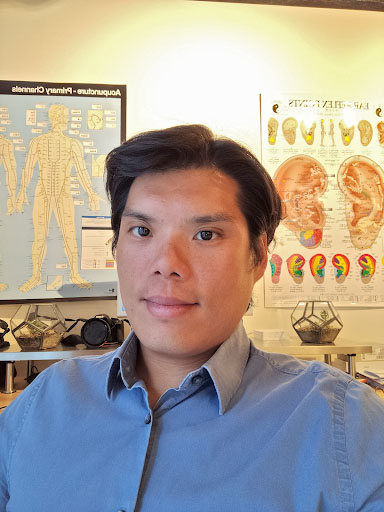
Gene Wei is a Board Certified Doctor of Oriental Medicine in the state of Florida, and the founder of AntiCancer360. He’s also a graduate of the University of California Los Angeles, and East West College of Natural Medicine.
His practice focuses on aggressive integrative strategies used alongside conventional oncology care, particularly for advanced and difficult cancers.