If you’ve been researching cancer, you’ve run into the ketogenic diet claim. Cancer runs on sugar. Cut the sugar, starve the tumor. It’s everywhere, it’s simple, and it has just enough truth in it to be convincing.
So a lot of people start with a keto diet. And here’s the part that concerns me: almost nobody asks them what kind of cancer they’re dealing with first. Nobody asks what’s driving it, what fats they’re using for their keto diet, or whether or not they can afford to lose any weight.
Now, I want to be clear of where I stand before I say anything critical. We use the ketogenic diet in our practice. It’s one of several dietary approaches I work with, and in the right situation I think it’s a legitimate tool. So my perspective isn’t coming from someone who’s biased against keto. And what I’m going to talk about in this article isn’t a case against keto. It’s a case against using it without asking a few questions first.
But over many cases and many years, I’ve landed somewhere more specific than “keto for cancer.” Keto may be useful, but it’s not universal. What it does seems to depend a lot on the characteristics of the cancer. And in a fair number of real situations keto simply isn’t practical. Because a diet nobody can stay on has an effect of zero, no matter how good the mechanism sounds.
This article is what I actually think about keto for cancer, along with the research as to why.
The Five Diets I Work With, and the One I Start With
Before we get into the science on keto, here’s the map of the diets that I use. Because “which diet to pick” is a real decision and I want you to see the whole diet spectrum, rather than focus on just one option. Here is the range of diets that I use in my practice.
Ketogenic. Very low carbohydrate, high fat, enough to push the body into burning fat and producing ketones. I use it in specific situations, for a defined window, with monitoring. It is the hardest of these to sustain and the one with the most documented downside.
Low-fat. The opposite lever from keto — pull the fat down rather than the carbohydrate. In practice this isn’t really a standalone diet so much as a setting you can apply to the others: low-fat plant-based, low-fat whole foods, or low-fat combined with our default diet (low-glycemic, carbohydrate-moderated, animal-protein-modulated). Worth knowing that the best randomized evidence that any diet moves cancer mortality came from a reduced-fat, high-vegetable approach — more on that at the end.
Plant-based. Whole-food, plant-forward. Strong general health profile, and for people who want to eat this way, it’s very workable. The main cost is that hitting protein targets takes deliberate effort, and there’s essentially no trial evidence for it in people with active disease.
Whole foods. Normal macronutrient spread (i.e. fat, carbs, protein), with an anticancer focus on the ingredients — lower glycemic, minimally processed, naturally raised, organic as much as possible. The easiest of these to actually live on.
And our default: low-glycemic, carbohydrate-moderated, animal-protein-modulated whole foods. This is the whole-foods diet with the blood-sugar load pulled down and animal protein dialed down, based on the person’s needs and situation. This is where I start with most people, most of the time, and I’ll explain why at the end.
Every one of these has a case for it, as well as a cost. Diet is one factor among several, and practicality is part of the assessment, not just an excuse to avoid a difficult diet.
What a Ketogenic Diet Is Actually Doing — Four Things at Once
So here’s how I think about all this.
We talk about “keto” like it’s one intervention. It really isn’t. It’s four separate things happening simultaneously, and each one has its own direction and its own way of going wrong:
- It lowers blood sugar and insulin. This is the part everyone focuses on.
- It raises ketones — and there are two main ones, acetoacetate and beta-hydroxybutyrate, which turn out to do measurably different things.
- It massively increases dietary fat and how much fat the body burns for energy.
- It often restricts calories — usually by accident, because the diet is harder to eat.
When it comes to cancer, the same diet can win on the first, lose on the second, lose on the third, and hurt the person on the fourth, all at once, in the same person. Once you see it that way, “does keto work for cancer?” stops being the main question, and better questions appear.
And the premise underneath all of it is shakier than many make it sound. The concept that “Cancer runs on sugar” comes from a 1920s observation. While it may be true in many cases (and we talk about it a lot), it’s also an oversimplification, an overgeneralization.
For example, when researchers actually infused labeled glucose into nine lung cancer patients during surgery and watched where it went, every single tumor was burning multiple fuels, including lactate — and metabolism varied region to region within the same tumor [1]. It isn’t that tumors don’t like glucose. It’s that they were never limited to it.
What the Human Trials Actually Found
This is the part that almost never gets emphasized, so I want to put it plainly and tell you how strong each piece is.
The strongest human evidence for the ketogenic diet is about tolerability, not tumors.
In a phase 1 trial of a ketogenic diet alongside chemoradiation for head and neck cancer, 4 of 12 patients completed the five weeks. Three were pulled for toxicity — two with severely high uric acid levels in the blood, one with acute inflammation of the pancreas. The trial did not finish. The authors’ conclusion: with only a third completing the trial, the diet “is considered not tolerable when combined with concurrent radiation and chemotherapy” [2].
In two trials running keto through chemoradiation for lung and pancreatic cancer, 3 of 9 patients finished, with two of them stopping because of side effects severe enough to pull them off the study [3].
In a glioblastoma feasibility study, 4 of 12 completed three months, and only 28% of eligible patients would even enroll [4].
In advanced solid tumors, patients had lost 13% of body weight by 16 weeks [5].
In stage IV breast cancer, people lost 10% of body weight in three months, and 22% of what they lost was muscle [6].
Pooled across 39 studies and 770 patients: about a quarter dropped out of controlled trials, and only 60% of people in single-arm studies finished the intervention [7].
I want to be precise about what this means, because it’s easy to overstate. In the human trials above, none were stopped because the diet made the cancer grow faster, and none were stopped over a death attributed to the diet. So that’s not where the risk lives. The risk is not being able to stick with the diet, weight loss, and muscle loss — and in advanced disease, those are significant risks.
And when it comes to the tumors themselves, the (highest evidence) randomized trials haven’t found a benefit.
The one randomized trial built to see whether a ketogenic diet slowed a brain tumor’s progression didn’t find a difference. At six months, 20% of the keto group hadn’t progressed, versus 16% of the control group — a gap small enough that it could easily be chance [8].
The randomized low-carbohydrate trial in recurrent prostate cancer didn’t find a difference either. PSA doubling time — how long it takes the PSA number to double, so longer is better — came in at 21 months on the diet versus 15 months on the control. On paper that looks like a win. But the statistics say otherwise: the P value was 0.316, which means a gap that size would turn up by chance roughly one in three times. So it isn’t a result you can lean on [9].
And here’s a detail that tells you more about the state of this field than any single result could.
There is only one study I can find that ever compared a ketogenic diet against another diet, head to head, in cancer patients. It was run at Albert Einstein College of Medicine in the Bronx: a randomized trial of a ketogenic diet versus a low-fat diet in women newly diagnosed with breast cancer, using the window between the biopsy and the surgery to look at what was actually happening inside the tumor tissue [10].
That is a well-built design. Two of the five diets I listed at the top, compared directly, in real patients, with the tumor itself as the measurement. If it had run to completion it would be the single most useful piece of evidence in this entire article.
It planned to enroll 65 women. It enrolled 11. The registry lists it as completed in 2020. As of this writing, six years later, no results have been posted to the registry and I cannot find a publication anywhere.
I want to be careful about that last part. It’s possible results from that trial exist in a conference abstract I haven’t located, and if they surface I’ll update this. But there is no public result I can point you to.
So when someone asks me which of these diets is better, head to head, in actual cancer patients — this is the honest answer: the one trial designed to find out couldn’t recruit enough people to answer the question. And notice where it broke. Not on the science, but rather on the trial recruitment. That’s the same wall nearly every trial in this article ran into, and it’s the reason I keep saying a diet’s practicality isn’t just a side thought.
One clarification, because these two studies get conflated — and the earlier one deserves more than the footnote I was about to give it.
Einstein did publish separate, earlier work: a 10-patient pilot in advanced cancer, testing whether a very-low-carbohydrate diet was even safe and feasible [11]. That study reported its results. And the results were not nothing.
Ten patients completed 26 to 28 days on the diet. Nine of them had documented, rapidly progressing disease going in. Five of those nine came out with stable disease or a partial remission on PET scan — with the ketogenic diet alone.
And the ones who responded had about three times the level of ketosis as the ones who kept progressing (P=0.018) — while calorie intake and weight loss did not separate the two groups. So whatever happened tracked with the ketosis, not with eating less.
Here’s the part that makes it stand out. These were patients with advanced, incurable cancer that was actively progressing. The trial’s own conference report states that eligibility required having failed or refused at least two courses of standard chemotherapy, and that concurrent chemotherapy was excluded [12].
I can’t confirm that against the full published methods, so I hold it a little loosely. But if it’s right, this is one of the very few places in the whole literature where something moved on a scan with the diet carrying most of the load.
And let me be clear, because this is the one result in the article that could be misread. Those patients weren’t off treatment by choice, and they weren’t off it on anyone’s advice. They were out of standard options. Nothing here is an argument for stepping away from treatments that are working.
And I have to hold this to the same standard I just applied to everyone else. This study involved:
- Ten patients, one arm, no control group, no randomization, no blinding. This is the exact design I told you to discount a few paragraphs ago.
- The readout was a PET scan at four weeks — not survival, and not even months of CT follow-up. Four weeks is a short window to call anything.
- And there’s a specific problem with using PET here. A PET scan measures glucose uptake. A ketogenic diet is built to lower glucose and insulin. In heart imaging, a high-fat low-carbohydrate prep is used deliberately, because it suppresses FDG uptake in normal tissue [13]. So a quieter scan after a ketogenic diet may partly reflect a changed tracer environment rather than a changed tumor. I don’t think that explains all of it. But nobody can tell you how much of it is actual benefit.
- The ketosis-versus-outcome correlation is the weakest kind there is. The patients who got deepest into ketosis were also the ones well enough to stay on a hard diet. Being well enough to comply, and doing better, are very hard to pull apart.
So what do I actually take from it? A real signal, in real people, in the hardest possible setting — but not proof in scientific terms. It tells me there’s potential for benefit in some cases, and that’s part of why I still use the ketogenic diet in some cases. It’s also exactly the kind of finding that should warrant a randomized trial.
And that is precisely what happened next. The head-to-head diet trial was the follow-up this pilot called for. Then it enrolled 11 of 65 and never reported. A promising uncontrolled result, followed by the properly designed study that couldn’t recruit — that sequence is the honest shape of this entire field.
Widen the lens and it’s the whole anticancer diet field, not just keto. A systematic review looked at all 252 randomized dietary trials ever run in cancer — 31,067 patients. Only 20 of those trials were actually designed to answer whether the cancer itself changed.
The rest were built around things like weight, blood markers, or quality of life. And of those 20 trials that were designed to see whether the cancer changed, 8 of them did find a benefit.
Only 7 of these 252 studies were designed to see whether people lived longer, and of those 7, one found a benefit. Their closing line: “there is currently limited evidence to support specific dietary interventions as a therapeutic tool to target cancer” [14].
Two guideline positions that are important to note. The first is from ESPEN — the European Society for Clinical Nutrition and Metabolism. They’re the body that writes the clinical nutrition guidelines most cancer centers and hospital dietitians actually work from, so when I refer to ESPEN throughout this article, that’s who I mean.
And ESPEN is blunt: “There are no clinical trials demonstrating a benefit of a ketogenic diet in cancer patients. Due to their low palatability, ketogenic diets may lead to insufficient energy intake and weight loss.” Their strong recommendation follows from that: “We recommend not to use dietary provisions that restrict energy intake in patients with or at risk of malnutrition” [15].
Then there’s ASCO — the American Society of Clinical Oncology, the main professional body for cancer physicians in the United States. It lands in the same place. Insufficient evidence to recommend for or against ketogenic, low-carbohydrate, low-fat, or fasting approaches [16].
But I’d be quoting ESPEN unfairly if I stopped there. The same organization also notes that the difficulty of inducing tumor responses “does not argue against preferring fat to supply energy to patients with advanced cancer and inflammation-induced insulin resistance” — and carries a separate recommendation that in weight-losing patients with insulin resistance, you should increase the ratio of fat to carbohydrate. ESPEN is more nuanced than the sentence people quote.
So Is Diet Useless? No — and Here’s How I Actually Think About This
I don’t want that stack of mostly null results to leave you with the wrong impression, because it’s not the conclusion I draw from them.
When someone is dealing with advanced cancer, we are usually not looking for the one thing that changes everything. We’re looking for a series of small edges that stack.
Think about the Olympics. The gap between a gold medal and fourth place is often a fraction of a percent. Nobody wins by one enormous advantage. They win by collecting a lot of small advantages. And when it comes to cancer, you never know when a small physiological nudge could set a person’s case in the right direction.

And there’s a second reason I don’t dismiss diet. These studies test one thing at a time, in isolation — which is the correct way to run a trial, but it isn’t how anyone actually gets treated.
In a real case we’re combining the oncology treatments with supplements, with repurposed medications, with the diet, with exercise and sleep and circulation renormalization (i.e. the Reflow Protocol). How all of that interacts has barely been studied. A gap in the research isn’t evidence that nothing is happening; it’s evidence that nobody looked.
So my position isn’t “diet doesn’t matter.” It’s this: a dietary approach is worth trying as long as you aren’t paying a real price for it. Because when a diet costs you nothing — no weight loss, no muscle loss, no misery, no interference with the treatments — then a small possible edge is worth aiming for, even if it’s unproven. But when it starts costing you those things, the math flips, and it flips fast.
That line is what this entire article is about. It’s why the downsides of keto get so much attention here. It’s also why the next few sections are about knowing which downsides may apply to you.
A Specific Caution: Bone Metastases
This one gets its own short section, because it comes up often and because the version that often circulates is wrong.
First: nobody has studied it. There is no trial of a ketogenic diet in people with bone metastases. And no ketogenic diet trial in oncology has reported a bone outcome at all — the systematic review of that whole literature tracked survival, progression, and body composition, and bone wasn’t among the things anyone looked at [17]. So everything below is reasoning from adjacent evidence, and I hold it loosely.
What is documented: ketogenic diets appear to slow bone building. Two markers of bone formation dropped 14% and 25% in a randomized dietary study, and stayed suppressed even after carbohydrates came back [18]; a 2026 mouse study found a similar finding, while the bone-removing cells remained unchanged [19].
Calcium handling shifts as well — 52% of children on a ketogenic diet developed high urinary calcium, with symptomatic kidney stones in around 1 in 10 when preventive potassium citrate wasn’t used [20].
And long-duration ketogenic diets can produce hypercalcemia — too much calcium in the blood — after a median of about two years [21]. That last one matters here specifically, because bone metastases already carry their own risk of high blood calcium.
One practical note. Even optimized ketogenic meal plans can come up short on vitamin D [22]— and adequate calcium and vitamin D are what protect against the drop in blood calcium that drugs like denosumab can cause. That’s why the guidelines say to make sure both are covered before starting them [23].
Now the correction. Sometimes you’ll hear that a ketogenic diet makes the body more acidic, and the body buffers that acid by pulling calcium out of the skeleton. I heard it enough that I went looking. It doesn’t hold up.
Three separate meta-analyses found that dietary acid load does raise urinary calcium, but does not produce a net loss of calcium from the body, and doesn’t move bone density [24]. So the real picture is less bone being built, not more being broken down — a smaller claim, and a more useful one, because it tells you what to actually monitor.
Where that leaves me: if there are bone metastases in the picture, I want serum calcium, vitamin D, and bone markers followed before and during any ketogenic trial, the oncology team informed, and everyone clear that we’re in unmapped territory.
Where the Animal Research Says to Be Careful — and How Strong Each Signal Is
The mechanism research for keto diets and cancer is almost all in mice and rats. And here’s the caution I keep coming back to: only about five in a hundred interventions that work in animals ever reach regulatory approval — and in cancer specifically it runs closer to three or four in a hundred [25].
That’s not because animal results usually point the wrong way — they often point the right way. It’s that surviving the whole path from a mouse study to a therapy that’s actually been shown to work in people is rare. So read all of this as a map of where to be careful, not as settled fact.
Some tumors can’t burn ketones. But some can. And you can tell in advance. Researchers screened 33 human cancer cell lines for the two enzymes a cell needs to use ketones as fuel — BDH1 and OXCT1. Think of them as the engine parts for a different fuel: no engine, no use for the fuel.
Researchers then took one high-expressor and one low-expressor and fed both the same ketogenic diet. The high-expressor grew faster and the mice died sooner. The low-expressor shrank. Then they knocked the enzymes out of the resistant tumor — and it became keto-sensitive [26]. Strength: strong as proof-of-concept, two cell lines, in mice, but no human validation.
But that ketone burning capacity isn’t fixed either — and this is the part that concerns me. In liver cancer, the enzyme OXCT1 is normally switched off. Starve those cells of nutrients and a signaling cascade switches it back on, and the tumors grow better because of it [27].
This means that the nutrient-deprived state the diet creates can turn on the machinery the diet was meant to exploit. So, a biopsy taken before you start may not describe the tumor six weeks into a ketogenic diet. Strength: moderate, cells and clinical samples.
Ketones aren’t only fuel — sometimes they turn up a growth signal. In melanoma driven by a BRAF V600E mutation, acetoacetate doesn’t get burned; it physically binds the mutated protein and makes its growth signal stronger. A high-fat ketogenic diet raised acetoacetate and grew those tumors — and left NRAS-mutant tumors alone [28].
That study gets quoted a lot, so here’s the honest state of it: a different lab fed actual ketogenic diets to BRAF V600E melanoma mice and got the opposite result — slower growth, and fewer lung metastases. That study ran two different ketogenic diets, and I want to give you all three numbers rather than just the best one: metastases showed up in 0% of the long-chain-fat keto group, 13% of the MCT keto group, and 33% of controls. So the research is mixed.
And a separate group found a problem with the original lab work. The acetoacetate used in those experiments comes packaged with lithium. When they tested the lithium by itself, it did the same thing — so the effect may have come from the lithium, not the ketone [29]. Two labs, two directions, zero human studies [30].
So I don’t think anyone can honestly say keto is dangerous in BRAF melanoma, or that it’s safe either. It’s unmapped, and going in without knowing is a gamble. Strength: contested.
Duration can matter more than the diet. In a rat model of an inherited kidney tumor syndrome, a ketogenic diet did nothing at four months, nothing at six — but at eight months the tumor volume on the keto diet had climbed to 2,377 cubic millimeters, versus 188 in controls [31]. Worth knowing this is an mTOR-driven hereditary model, not ordinary kidney cancer.
In a separate kidney cancer model, keto slightly shrank the tumors and the mice died anyway — 65-day survival dropped from 60% in controls to 20% and 17% in the two keto arms, from weight loss and inflammation [32]. Strength: moderate. And for kidney cancer specifically, my honest answer is that we don’t know.
The brain cancer claim for keto is also thinner than its reputation. The idea that glioblastoma can’t burn ketones traces back to a study of 22 tumor biopsies, stained to see which proteins were present. And that’s the limitation right there.
Staining tells you what enzymes a tumor has. It doesn’t tell you what the tumor actually does with ketones. Nobody in that study fed a tumor ketones and watched what happened. In those biopsies, the ketone-handling enzymes were low in 14 of 17 glioblastomas — meaning 3 of 17 weren’t — and two other ketone-handling enzymes were positive in most of the same tumors.
And the authors’ actual conclusion was narrower than the claim that got built on it. What they hypothesized was that patients whose gliomas showed low expression of those ketone-handling enzymes might respond better to a ketogenic diet than patients whose tumors expressed them.
That’s a claim about WHICH tumors. It is not a claim that glioblastoma can’t use ketones. And they said plainly that testing it would take animal models or a large clinical trial [33].
But when a UCLA group later tested patient-derived glioblastoma, they found it burns both fats and ketones, and that the unrestricted ketogenic diet “did not reduce tumor growth and for some models significantly reduced survival” [34].
A separate trial in both IDH-mutant and IDH-normal glioma found nothing — with ketosis confirmed in the blood, which rules out the usual excuse [35]. Strength: the original claim is weak; the contradicting work is stronger.
And the one study that reframed this for me. In mice with inflammation-driven wasting, a ketogenic diet shrank the tumors and killed the animals sooner. The mechanism is elegant but awful: the diet drives a rusting-type cell death in the tumor called ferroptosis. But that same process burns through the same cellular repair supply the adrenal glands need to make their stress hormone.
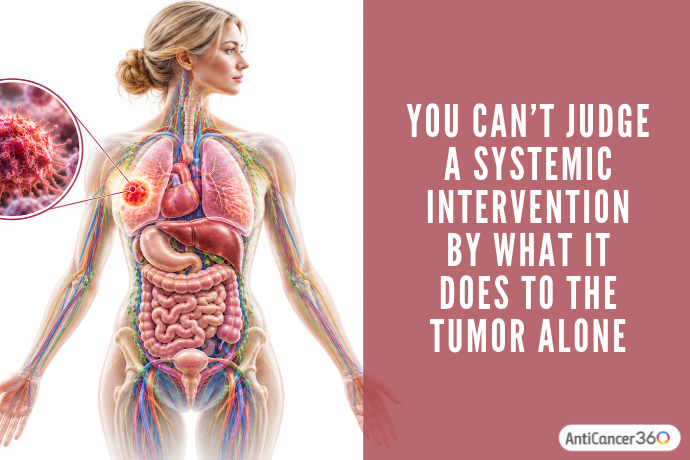
So the tumor got smaller, but the host ran out of hormone and wasted faster. And giving a corticosteroid drug rescued survival while still keeping the tumor smaller [36]. The authors’ line supports a main point of this whole article: you can’t judge a systemic intervention by its effect on the tumor alone.
And maybe it isn’t the ketones at all. A 2026 study fed mice a ketogenic diet and watched intestinal tumors accelerate and survival shorten — then genetically turned ketone production up, and down, and it changed nothing.
What did matter in this study was blocking fat burning [37]. Worth knowing that diet was 80% lard, and the study never varied the type of fat. So the honest headline of this study isn’t “keto feeds tumors” — it’s “an 80% lard diet fed tumors in these mice,” and the fat may be the active variable.
If You Do Keto: The Fat You Build It From May Matter More Than the Ketones
Most keto guidance points you toward saturated fat — butter, cream, coconut oil, fatty meat. Nobody chose that because the evidence said it made a better ketogenic diet. It’s inherited from the classic 4:1 epilepsy diet, which runs on heavy cream and butter because that’s what gets a child to the ratio palatably.
And the one study that actually tested the swap points the other way. Researchers at the University of Florida fed 20 healthy adults two ketogenic diets with identical macronutrients, differing only in the type of fat. The polyunsaturated group’s ketones rose 8.4 mg/dL versus 3.1 in the saturated fat group.
Insulin sensitivity improved on the polyunsaturated diet. Cholesterol and LDL rose significantly on the saturated one and didn’t on the other [38]. That was 20 healthy adults over five days, measuring metabolism and not cancer, so I hold it loosely.
But “polyunsaturated fat” is too broad a term, and this is the correction I’d make to my own earlier framing. Someone fed mice seven different ketogenic diets that differed only in the fat source, against real tumors.
Only the fish-oil version beat standard keto. Corn oil — which is polyunsaturated — did nothing extra. Neither did olive, palm, milk fat, or MCT [39]. So the evidence points at omega-3, not at polyunsaturated fat in general.
And there’s a ceiling on that, which I’d rather flag than hide. The same chemistry that makes polyunsaturated fats sensitize tumors — they make cell membranes easier to oxidize — also makes T cells more vulnerable.
And T cells are the immune cells that kill tumors, and the payload of every immunotherapy drug. In mice, diets with a lower ratio of polyunsaturated to monounsaturated fat produced slower tumor growth and more active killer T cells [40]. More is not automatically better.
So the short answer: omega-3-forward, deliberately moderated, not loaded to the extreme — and especially careful in someone on immunotherapy.
The One Place Keto Has a Real, Specific Case
I don’t want to leave you with only the cautions, because there’s one situation where the evidence is genuinely good.
Certain targeted drugs called PI3K inhibitors have a built-in problem: the drug spikes blood sugar, the body answers with insulin, and that insulin switches the very pathway back on that the drug was blocking. A ketogenic diet suppresses the insulin surge, and adding it substantially improved the drug’s effect across four tumor models [41].
That’s not “keto fights cancer.” It’s keto as a precisely-aimed helper for a specific drug in a specific genetic situation — which is a much more useful way to think about it.
And in the same paper, the authors wrote this: “In some instances, such as the AML model, the ketogenic diet alone accelerated disease progression suggesting that this diet may be detrimental for some cancer patients when used in isolation.” Both perspectives, same study. That’s the essence of this whole topic in one paragraph.
What I Actually See When Someone Arrives Already on Keto
Everything up to here is the published record. This next part isn’t. It’s just what I see in the cases that I work with. I want to label it that way, because it’s a weaker kind of evidence.
A fair number of people come to me already on a ketogenic diet. They’ve done the reading, they’ve made the change, and they’re committed to it. And there are really two versions of that person walking in.
The first one is still in good shape. Weight is holding, muscle is holding, they’re eating enough, and they feel alright. The second one has lost a lot of weight, and a lot of muscle along with it — and often they haven’t fully registered how much, because everywhere they’ve looked, the scale going down has been framed as a good thing.
What both of them have in common is the reason they’ve sought me out. Whatever they’ve been doing overall, keto included, hasn’t been enough. The disease is still progressing.
Now let me be careful about what that does and does not tell you, because left alone it’s the most misleading sentence in this article. The people who arrive in my office on keto are, by definition, the ones it wasn’t working well enough for.
The person who started keto and is doing fine may never call me. I have little to no view of them at all. So “it usually isn’t working by the time they get here” is a statement about who ends up in front of me. It is not a statement about how often keto works. That’s a selection problem, so I want to emphasize it.
With that said, here’s what I actually do.
If they’re in good condition, and the characteristics of the cancer check out for keto, I’ll often leave it in place — even though what they walked in with wasn’t getting them the results they were hoping for. Two reasons.
One: you never know whether it’s contributing something I can’t see. A diet that isn’t visibly working is not the same thing as a diet doing nothing.
Two, and this is the bigger one: the thing I’m changing is everything around their keto diet. Once the oncology treatments and the targeted integrative layer are working alongside it, it may synergize in a way it never could on its own. I just make sure they’re getting the right fats as we talked about earlier, and make sure their fat, protein, and overall calorie intake are up to par.
But if they’ve lost significant weight and muscle, that’s a different conversation, and usually a short one. That’s when I move them toward a more balanced diet. Muscle is the thing I’m least willing to spend. By the time someone has given up a lot of it, no mechanism on paper is worth what it’s costing them.
So, this is the same principle from earlier: worth keeping as long as you’re not paying a real price for it. Worth changing the moment you are.
🎯 So How Do I Actually Decide? Here’s the Practical Part
But overall, my recommendation is to stop asking whether keto is good for cancer. Start asking which of the four levers you’re trying to move, and whether this diet is the right tool for that one. Here’s how that becomes a decision.
First, five questions — in this order.
- What’s driving the cancer? BRAF V600E, an mTOR-driven syndrome, or PI3K-mutant — these drivers point in different directions: an open question, a caution, and the one situation with a real case for keto, in that order. So if there’s a known driver mutation, it belongs in the conversation before the diet does.
- Can I afford the weight? If BMI is low, or weight has already been falling, this question closes the discussion. ESPEN’s strong recommendation applies and I don’t start keto there.
- What am I in the middle of right now? Concurrent chemoradiation is where the human tolerability data is worst — 4 of 12, and 3 of 9. If you’re in that window, the answer is usually not now.
- Is bone involved? If there are bone metastases, add serum calcium, vitamin D, and bone markers to the monitoring list before starting, and make sure the oncology team knows.
- What fat would this be built from? Omega-3-forward, not saturated-fat-forward, and not corn and soybean oil either.
Second — if your answers point toward trying the keto diet, here’s how I’d build it.
- Set a calorie floor and hold it. ESPEN’s target is 25–30 kcal/kg/day. Most keto failures in the trials were accidental starvation, not the carbohydrate restriction. So I always recommend tracking your calories, especially at the start so you get an idea of what you’re consuming. If ketosis is costing you calories you can’t spare, the diet has stopped doing what you wanted.
- Protect protein. ESPEN recommends above 1 g/kg/day, up to 1.5. Protein is your main defense against losing muscle, and losing muscle is one of the most consistent predictors of doing badly. A note on our protein-modulation approach, because it’s easy to misread: dialing animal protein down is something we compensate with lower methionine plant protein. And during active treatment, or anywhere muscle is at risk, we may push animal protein up. So in general, the way we decide protein levels depends on each case.
- Build the fat from omega-3 first. Fresh cold-pressed, kept cold and dark, plus fish oil. Coconut in moderation. Even less olive and avocado. And animal fat and butter present, but in small amounts if desired. A deliberate balance is the key here.
- Give it a defined window. Weeks to months with a review date, not an identity you adopt.
Third — what to actually track. Not just the glucose-ketone index, which is the only thing most keto guidance measures:
- Body weight, weekly. A sustained drop is the earliest warning sign.
- Lean mass if you can get it — a body-composition scan if available. Losing weight isn’t the concern; losing muscle is.
- Albumin and prealbumin, as a read on nutritional status.
- A lipid panel at baseline and again at 6–8 weeks.
- Uric acid. Hyperuricemia showed up in 64% of patients in one trial and caused severe toxicity in another. This is inexpensive to check and easy to miss.
- Serum calcium and vitamin D — routine for anyone, and non-negotiable if there’s bone involvement or you’re on a bone-protective drug.
- Blood glucose and ketones, yes — but as one input among these, not the only scoreboard.
Fourth — write your stopping rules down in advance. Mine, roughly: more than 5% unintentional body weight loss, any measurable loss of lean mass, rising uric acid, a lipid panel moving badly, new or worsening treatment toxicity, or simply that you can’t eat enough. And discuss all of this with your oncology team, because they’re the ones monitoring your labs.
Why I Usually Don’t Start With Keto
Here’s my actual position, and I’ll show you the reasoning rather than just asserting it.
For most people, most of the time, I start with a low-glycemic, carbohydrate-moderated, animal-protein-modulated whole-foods diet — and I put the aggressive effort into the targeted integrative layer, alongside their oncology treatments (not in place of them).

So, three reasons why I start with a low-glycemic, carbohydrate-moderated, animal-protein-modulated whole-foods diet.
One: diet has barely been tested against the cancer itself, and where it has been tested at scale, it has mostly failed. That’s the 252-trial review above. It applies to my preferred diet exactly as much as it applies to keto. But my preferred diet has much less of a downside.
Two: the best-designed failure wasn’t a case of people not sticking to the diet. In a trial of 3,088 breast cancer survivors, women achieved and sustained a large, objectively verified dietary change over 7.3 years — and recurrence didn’t move [42]. The review authors put it bluntly: compliance was often enough to genuinely change the diet, “but this change did not translate to a difference in cancer outcomes,” and that “challenges the previously suggested causal connections” seen in observational data.
I’m going to apply this evidence to myself as well. The evidence for the low-glycemic position I prefer is observational, and it’s the same kind of evidence I just discounted. Higher blood sugar load did correlate with worse outcomes in 1,011 stage III colon cancer patients [43] — and that’s an association, with the effect concentrated in people who were overweight. So, nobody has run the randomized trial of my preferred diet either. But the signal for a blood sugar controlled diet is real.
Three: the risk profile is lopsided. The downside of a low-glycemic whole-foods diet is roughly zero. The downside of keto in the wrong person on the other hand is significant (see the trial data in the middle of this article).
So my claim isn’t “balanced is better.” I can’t necessarily support that. My claim is: balanced is the lower-variance bet — comparable unproven upside, much lower downside, and a diet people actually live on. I’d rather spend the aggressive effort on the treatments than on the diet.
One more honest note. The best randomized evidence that any diet moves a cancer mortality number came from a moderate, reduced-fat, high-vegetable whole-foods pattern in nearly 49,000 women [44] — not from an extreme diet.
That’s the low-fat approach from the list at the top, and it’s a fair point against my own preference for the low-glycemic version. And the single dietary trial in the entire randomized record that helped people live longer did it by counseling patients to eat more.
One distinction worth drawing, though, because these get lumped together. A randomized trial gave women a short fasting-mimicking diet in cycles around each round of chemotherapy. Tumor response improved in proportion to how many cycles the patient actually completed [45]. Only 20% completed all of them, and the trial’s main measure — whether the tumor had completely disappeared by the time of surgery — showed no difference between the groups.
But that is a short, cyclical metabolic stress timed around the treatments — not a continuous ketogenic diet. Those are genuinely different interventions, and I want to be clear that I’m not arguing against the first one.
We use cyclical fasting-mimicking around chemotherapy ourselves, for close to the reason that trial suggests. Brief and timed is a very different ask of a person than permanent and continuous, and the risks are different too. When I say keto isn’t my default, I’m talking about the continuous version.
The Bottom Line
Keto is an extreme, and extremes are tools. The argument for using one is that cancer is an extreme situation — so you tip the balance deliberately, toward a named mechanism, for a season. That temporary framing is one of the main points of this article. What keto shouldn’t be in the context of fighting cancer is an identity, or a permanent lifestyle.
In Eastern medicine, we think in terms of balance — not that any one food is good or evil, but where it fits, how often, and how much. That perspective, in my opinion, holds up better than trying to figure out “what diet is best.”
For most people, most of the time, a balanced low-glycemic whole-foods diet holds the terrain while the real pressure comes from their cancer treatments. And in specific situations, for a defined window, with monitoring, keto is also one of the tools I reach for.
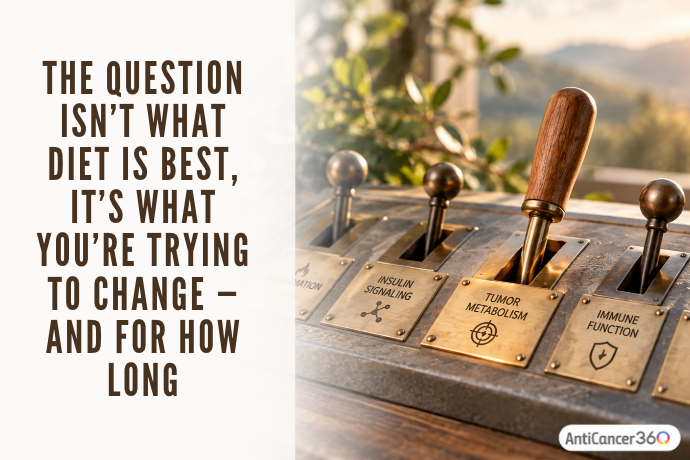
If you take one thing from this: the question isn’t whether to do keto. It’s which lever you’re trying to move, what the cancer you’re dealing with is actually driven by, what fat you’d build it from, and how you’ll know when to stop.
Frequently Asked Questions
Does a ketogenic diet starve cancer? Not reliably. The idea rests on tumors being dependent on glucose, but when researchers traced labeled glucose in living patients, every tumor burned multiple fuels and metabolism varied within a single tumor. Some tumors also carry the enzymes to burn ketones directly, which makes a ketogenic diet a fuel source rather than a restriction.
Which cancers might a ketogenic diet be worse for? The clearest cautions in animal research are tumors that express the ketone-burning enzymes BDH1 and OXCT1, mTOR-driven hereditary tumors, and some leukemia models. There’s contested animal evidence on BRAF V600E melanoma pointing in both directions. All of this is animal data — and only about one in ten promising animal findings ever becomes a proven human treatment, closer to three or four in a hundred in cancer.
Is keto safe if I have bone metastases? Nobody knows, because it has never been studied — no trial of a ketogenic diet in bone-metastatic disease exists, and no ketogenic cancer trial has measured a bone outcome. What is documented is that ketogenic diets appear to slow bone building, raise urinary calcium in about half of long-term users, and can occasionally produce high blood calcium after long durations. Since bone metastases already carry their own risk of high blood calcium, and since bone-protective drugs like denosumab depend on adequate calcium and vitamin D, this is a situation for close monitoring rather than a blanket no.
Is keto safe during chemotherapy and radiation? The human tolerability data in that setting is poor. In trials combining a ketogenic diet with concurrent chemoradiation, 4 of 12 patients completed the diet in one, and 3 of 9 in another, with patients pulled off study for side effects in both. That’s a tolerability problem, not evidence that the diet made the cancer worse — but it’s the main reason I usually don’t start keto during that window.
Should a keto diet use saturated fat or polyunsaturated fat? Most keto advice points to saturated fat, but the one controlled study that swapped the fat type inside identical macronutrients found more ketones, better insulin sensitivity, and better cholesterol on the polyunsaturated version. More specifically, in the one animal study comparing seven ketogenic fat sources against tumors, only fish oil outperformed standard keto — corn oil did not. So the evidence points at omega-3, not polyunsaturated fat generally.
What should I monitor if I do a ketogenic diet with cancer? Body weight weekly, lean mass if you can measure it, albumin, a lipid panel, uric acid, and calcium and vitamin D — alongside glucose and ketones. Set stopping rules before you start, and have your medical team watching your labs.
What do you recommend instead most of the time? A low-glycemic, carbohydrate-moderated, animal-protein-modulated whole-foods diet. Not because it’s proven — no diet is — but because it has comparable unproven upside, far lower downside, and people can actually sustain it.
Disclaimer
⚖️ This content is for educational purposes only and reflects clinical observations and emerging research. It is not medical advice and is not intended to diagnose, treat, cure, or prevent any disease. The methods discussed are experimental and are generally most appropriate for advanced cases where conventional treatments have limited proven benefit. They should be considered alongside, not instead of, conventional medical care, and only under the supervision of qualified medical professionals familiar with your specific case. Individual results vary. Anticancer360 does not replace your oncologist or primary care team. Always consult your treating physicians before making changes to your treatment plan, diet, or supplement regimen.
Gene Wei, Doctor of Oriental Medicine — integrative practitioner focused on cancer care, anticancer360.
Which describes you best?
Please select one of the options below, and you'll be guided to the online training that best fits your situation.

I'm fighting an advanced (or late stage) cancer and I'm determined to "beat the odds."

I'm fighting an earlier staged cancer, and want to maximize the outcome & minimize the side effects.
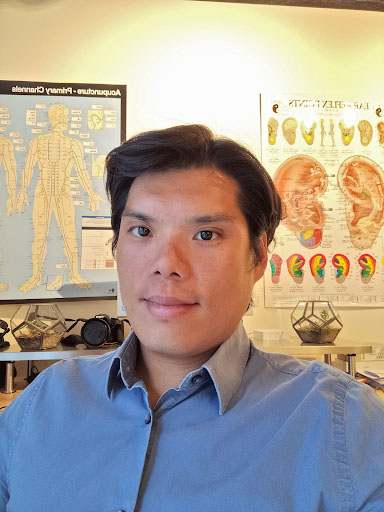
Gene Wei is a Board Certified Doctor of Oriental Medicine in the state of Florida, and the founder of AntiCancer360. He’s also a graduate of the University of California Los Angeles, and East West College of Natural Medicine.
His practice focuses on aggressive integrative strategies used alongside conventional oncology care, particularly for advanced and difficult cancers.