
Research your cancer's mechanisms — before you spend another dollar on supplements.
A research report built by a cell biologist, a Doctor of Oriental Medicine, and a pharmacist — so you know which compounds actually target the pathways your cancer type relies on, which ones matter most, and which could work against your treatment.
Not medical advice. Built to bring to your oncology team.
See a sample report ↓Watch — how your report gets built
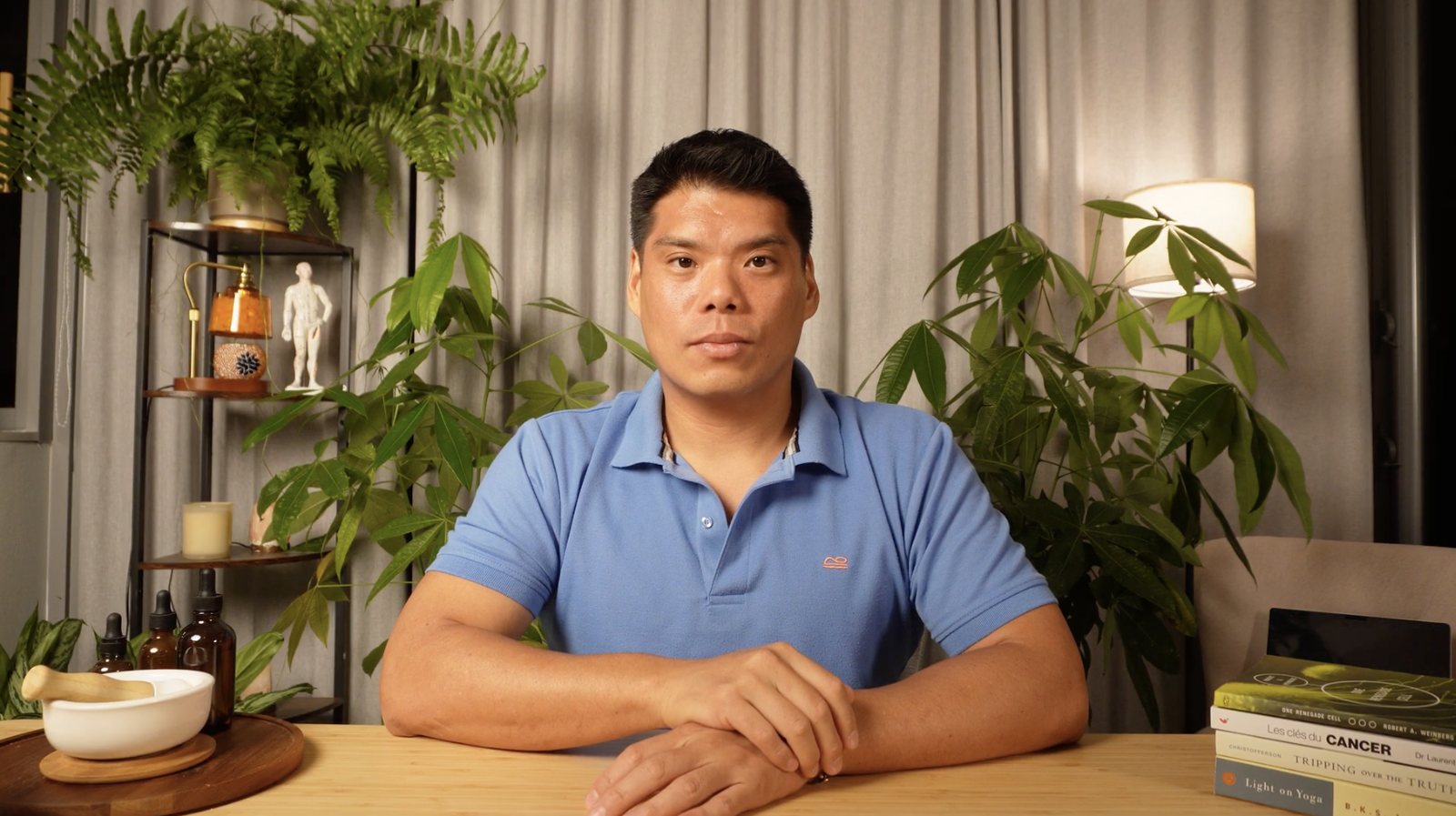
About 7 minutes. No email required to watch.
Gene Wei, DOM — Doctor of Oriental Medicine. Fourteen years working with cancer cases alongside conventional oncology care.
The problem this solves
If you're building a supplement program to support your body against cancer, you're probably doing it from search results, forum posts, and whatever a well-meaning friend sent you.
The trouble isn't that there's no information. It's that there's too much, none of it is organized around your type of cancer, and almost none of it accounts for what you're already taking.
So people end up spending five, six, seven hundred dollars a month on a stack of supplements assembled more or less at random — some of which cancel each other out, some of which may interact with their conventional treatments, and most of which were never chosen against the actual mechanisms their cancer type tends to use.
This report is the research step that should come first.
And there's a second problem underneath that one. Most natural substances never get past animal studies, and only about one in ten things that work in animals turn out to matter in people. So an approach built purely on published research will only take you so far. This is where experience becomes critical.
What actually happens
Three people work on your research report, and each one does something the other two can't.
Researches the pathways
Michael Yuhasz II, MS
Cell biologist. Reads which metabolic and signaling mechanisms your cancer type tends to rely on, straight from the published literature.
Builds and prioritizes it
Gene Wei, DOM, AP
Doctor of Oriental Medicine. Fourteen years deciding which compounds actually matter in a person, not just which ones appear in a study.
Reviews it for safety
Patricia Weiser, PharmD
Pharmacist. Checks every item against your current medications and conventional treatment, and annotates the interactions.
-
1A cell biologist researches the pathways
Which metabolic and signaling pathways does your cancer type tend to rely on? This is published science, read by someone trained to read it.
-
2Gene builds the supplement direction — and prioritizes it
Gene Wei is a Doctor of Oriental Medicine and an integrative practitioner focused on cancer care. This is the step where fourteen years of practice does the work that research alone can't.
Published studies can tell you that a compound acts on a pathway. What they can't tell you is which of those compounds turn out to matter in an actual person — because for most of them, the human trials were never funded, and nobody has studied which ones make the difference.
So you don't get a flat list of twenty or thirty compounds. You get a prioritized one: what to look at first, what's secondary, and what's worth knowing about but lower down. Plus which combinations work together and which work against each other.
That prioritization comes from published research where it exists — and from fourteen years of working with difficult cases alongside conventional treatment where it doesn't. And the report tells you which is which.
-
3A pharmacist reviews it for safety
Every item gets checked against the medications and conventional treatments you're currently on, and annotated for interactions.
And when there's an interaction, we don't just flag it and stop. We explain what the conflict actually is — and where the research suggests that timing or separation could reduce the risk, we lay that out too, so you and your doctors have something concrete to work from.
This third step is the one almost nobody else does, and it's the one most likely to matter. If you're on opioid painkillers, there are common supplements that amplify them — at the extreme, dangerously. That's not something a forum post will tell you.
Not medical advice. Built to bring to your oncology team.
See what you'd actually be getting
We're preparing a sample report — built on a fictional composite case — so you can see the format before you buy: the pathway section, a slice of the prioritized list, and a real pharmacist annotation. If you'd like to see it before it's published here, just ask.
What you receive
A written report containing:
- The metabolic and signaling pathways associated with your cancer type
- The compounds with published research behind them for targeting those mechanisms
- A priority ranking — what to look at first, and what's further down — based on published research and, where the research runs out, on fourteen years of clinical experience, with the report identifying which is which
- Which combinations are synergistic and which cancel each other out, again based on both research and experience
- Pharmacist annotations on interactions and safety against your current medications and conventional treatments, including where timing or separation may change the picture
- Delivered in 3 to 7 business days from the time your intake is complete
What this is not
I'd rather be direct about this before you buy than have you disappointed after.
This is not personalized medical advice. It's mechanism research — this cancer type tends to use these pathways, these compounds have research behind them for those pathways. It is not a prescription, a treatment plan, or a recommendation for your individual case.
This is not a substitute for your oncology team. It's built to be brought to them. Every decision about what you actually take should be made with your doctors.
This is not a consultation. No call is included with the report. If you want someone walking through it with you and adjusting as you go, that's one of our full programs, not this report.
This is not a cure, and nobody can promise you one. These methods are experimental. There's real science behind them, but most of it stops at the preclinical stage because nobody funds the human trials. Anyone telling you differently is telling you something they can't know.
How it works
- You purchase the report.
- You receive a secure intake link where you'll submit your case history and relevant medical records — diagnosis, pathology report, staging, cancer gene profiling if applicable, current treatment, current medications and supplements, and recent labs and scans if you have them.
- Our team researches your case. Cell biologist first, then Dr. Gene, then the pharmacist review.
- You receive the report and can bring it to your oncologist.
Once your intake is in, the report comes back within 3 to 7 business days. Cancer is time-sensitive, and we've built the process around that.
Price and refunds
$425, one time.
Because the report is original research done specifically for your case, it can't be returned once the work has started.
So here's how we handle it: you can cancel for a full refund any time before our team begins researching your case. Once we start, we'll let you know — and from that point the work is underway. If your cancer type turns out to have too little published research to build something useful, we'll tell you before we start and refund you in full.
Not medical advice. Built to bring to your oncology team.
Who this isn't the right fit for
If you want someone with you through the process — reassessing as scans come back, adjusting when something isn't working, answering questions as they come up — the report isn't that. That's our Beat The Odds program, and it's a different level of involvement and cost.
If you're at an early stage and in active treatment, Dr. Gene generally doesn't recommend extensive supplementation during treatment for early-stage cases. Where it tends to make more sense is aftercare, once treatment is finished. If that's your situation, say so at intake and we'll build the report around the aftercare window instead.
If you're looking for a guarantee, we don't have one to give you, and you should be careful with anyone who does.
Questions people ask
Can I use this without telling my oncologist?
We can only recommend that you tell your oncologist everything you're taking. The report is built to be a conversation with your medical team, not a substitute for one — and the interaction annotations are only useful if the person managing your treatment sees them.
What if my cancer type is rare?
Let us know at intake. Where the published research on a specific cancer type is thin, we build the report around the fundamental mechanisms that most cancers rely on — the pathways that show up broadly rather than the ones specific to a single tumor type. We'll tell you up front which of those two you're getting. And if we don't think we can build something useful for your case at all, we'll say so before we start and refund you in full.
How do you decide what goes at the top of the priority list?
Published research first, where it exists. Where it doesn't — and for most of these compounds it doesn't, because the human trials were never funded — the ranking comes from fourteen years of working with advanced cases alongside conventional treatment. The report labels which is which, so you always know what you're looking at.
Is this the same as what program members get?
No. Program members get the initial research, detailed program design, direction and support that gets revised as their case changes, weekly support calls, and messaging support. The report is the research step, delivered once.
Can I upgrade to a program later?
Yes. If you decide you want a full program within 90 days of receiving your report, tell us and we'll credit what you paid toward it.
Who sees my medical records?
Only the core members of our team. They're submitted through a secure intake, not by email.
Start with the research.
Three specialists, your cancer type, your current medications — and a report you can put in front of your oncologist.
Not medical advice. Built to bring to your oncology team.